The Planets / St. Paul’s Suite- Album Overview
Gustav Holst’s "The Planets," composed between 1914 and 1917, is one of the most iconic orchestral suites in the classical music repertoire. Released in various formats since its completion, the album typically includes the suite alongside Holst’s "St. Paul’s Suite," which was composed in 1913. The recording of "The Planets" has been released by numerous labels, but one of the most notable versions is the 1978 recording by the London Philharmonic Orchestra conducted by Sir Adrian Boult, released under the Decca label.
"The Planets" consists of seven movements, each named after a Roman god and associated with its astrological character: Mars, Venus, Mercury, Jupiter, Saturn, Uranus, and Neptune. Each movement is distinct, showcasing Holst’s innovative orchestration and rhythmic exploration, reflecting the cultural and historical context of the early 20th century, including the tensions leading to World War I. "St. Paul’s Suite," while less frequently performed, is equally significant as it represents Holst’s connection to the folk music traditions of England.
The suite and its movements have been interpreted as a reflection of humanity's complex relationship with the cosmos and our internal struggles. Holst’s work has had a lasting impact on the development of orchestral music, influencing countless composers and becoming a staple in concert halls worldwide. The significance of this album lies not just in its musical brilliance but also in its ability to convey deep emotional and philosophical themes, making it a timeless piece of art.
Review
Holst's "The Planets" is a masterful orchestral suite that showcases the composer’s extraordinary ability to evoke emotion through sound. The opening movement, "Mars, the Bringer of War," sets a dramatic tone with its relentless rhythms and ominous brass, immediately capturing the listener’s attention. In contrast, "Venus, the Bringer of Peace," offers a serene respite with its lush harmonies and gentle woodwinds, highlighting Holst's versatility as a composer.
The seamless transitions between movements reveal Holst's understanding of orchestral color and texture, creating a cinematic experience long before film music became prevalent. The ethereal "Neptune, the Mystic," with its haunting choral elements, leaves a lingering sense of wonder, inviting listeners to reflect on the vastness of the universe.
"St. Paul’s Suite" complements "The Planets" beautifully, showcasing Holst’s folk influences and lyrical compositions. Its lively rhythms and engaging melodies provide a contrast to the cosmic themes explored in "The Planets." Overall, the album is a remarkable journey through both the celestial and the earthly, solidifying Holst's legacy as a pivotal figure in classical music.
Highlights
- Stunning orchestration that brings each movement to life.
- Thematic depth that resonates with listeners across generations.
- Holst's unique blend of classical and folk elements in "St. Paul’s Suite."
Weak points
- Some movements may feel less engaging compared to the more popular ones.
- The length of the suite might deter casual listeners.
- Lack of vocal elements in "The Planets" may limit its appeal to some audiences.
Overall evaluation
Gustav Holst's "The Planets / St. Paul’s Suite" is an essential album for both classical music enthusiasts and casual listeners alike. It combines rich orchestral textures with profound themes, offering a captivating exploration of both the cosmos and human experience.
Personal rating: 9/10

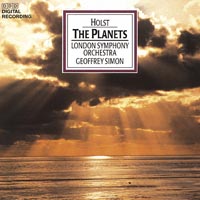
 1981The Planets, Op. 32