The Planets / Pluto- Album Overview
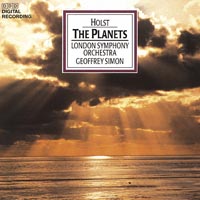
The album "The Planets" by Gustav Holst was composed between 1914 and 1917, with the first complete performance taking place in 1920. Holst's orchestral suite is divided into seven movements, each named after a planet in the solar system and its corresponding astrological character. The suite was released under various labels, with the most notable recordings appearing on the Decca and RCA labels. The movements include "Mars, the Bringer of War," "Venus, the Bringer of Peace," "Mercury, the Winged Messenger," "Jupiter, the Bringer of Jollity," "Saturn, the Bringer of Old Age," "Uranus, the Magician," and "Neptune, the Mystic." In 2000, the work was expanded to include "Pluto, the Renewer," composed by Colin Matthews, which was inspired by Holst's original themes. The collaboration with Matthews adds a contemporary perspective while maintaining Holst's astrological motifs. "The Planets" has gained immense cultural significance, influencing various genres, including film scores and popular music. Its themes of war, peace, and the passage of time resonate deeply, making it a staple in orchestral repertoire and a profound exploration of the human experience.
Review
Holst's "The Planets" is a masterwork that transcends its time, combining innovative orchestration with deep emotional resonance. Each movement showcases a distinct musical language, from the relentless drive of "Mars" to the ethereal beauty of "Neptune." The orchestration is rich and varied, utilizing a large orchestra that includes a chorus in the final movement, which creates a haunting atmosphere. The thematic exploration of planetary influences provides a framework for Holst's artistic vision, allowing listeners to journey through the complexities of human emotion and existence. The addition of "Pluto," composed by Matthews, seamlessly integrates into the original suite, paying homage to Holst while expanding the narrative to include modern interpretations of the celestial body. The overall soundscape is both ambitious and accessible, appealing to classical aficionados and newcomers alike, while the orchestral brilliance solidifies Holst's legacy as one of the great composers of the early 20th century.
Highlights
- The innovative orchestration and rich textures of the movements.
- The emotional depth and thematic exploration of human experience.
- The cultural influence and relevance of the suite in modern music.
Weak points
- The length of the suite may be daunting for casual listeners.
- Some movements may feel disjointed in their thematic transitions.
- The complexity of the orchestration requires attentive listening to fully appreciate.
Overall evaluation
Gustav Holst's "The Planets" remains a landmark in the orchestral repertoire, blending astrological themes with profound musical expression. Its continued relevance and adaptability in various artistic contexts affirm its status as a timeless classic.
Personal rating: 9/10

 1981The Planets, Op. 32