
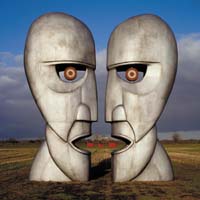
The Division Bell by Pink Floyd: expectations vs reality
The Division Bell- Album Overview
"The Division Bell," released on March 30, 1994, is Pink Floyd's fourteenth studio album and marks a significant moment in the band's history, being their last album featuring original material. Released under the label Columbia Records, the album was produced by the band members themselves, primarily David Gilmour and Nick Mason, with contributions from keyboardist Richard Wright. The recording sessions took place at Gilmour's personal studio, Meddle, and at Abbey Road Studios in London. This album was notable for its introspective themes, exploring concepts of communication, division, and unity, reflecting the band's internal struggles and the broader societal context of the early 1990s. The album features a rich array of instrumentation and showcases the band's characteristic sound, blending rock with progressive elements. The lead single, "Learning to Fly," became a commercial success, reaching the top of the charts in several countries. Other notable tracks include "High Hopes," "Take It Back," and "Marooned," which features an instrumental section that won the Grammy Award for Best Instrumental Performance. The album art, designed by Storm Thorgerson, further emphasizes its themes, featuring a pair of large, metallic heads representing the division and disconnection. "The Division Bell" was met with mixed reviews upon its release but has since gained recognition as a significant, albeit transitional, work in Pink Floyd's discography.
Review
Musically, "The Division Bell" retains the lush soundscapes and introspective lyrics for which Pink Floyd is known, yet it feels somewhat different from the band's earlier works. The album delves into themes of communication, both personal and societal, with tracks like "What Do You Want from Me" and "Keep Talking" addressing the struggle to connect in a fragmented world. The production is polished, with Gilmour's soaring guitar solos and Wright's atmospheric keys taking center stage, creating a sound that is both familiar and fresh. However, the lyrics sometimes fall short of the profound depth found in earlier albums like "The Dark Side of the Moon" or "The Wall." While the thematic exploration of disconnection is relevant, it can feel overly simplistic at times. The interplay between Gilmour and Wright is evident, but the absence of Roger Waters' lyrical prowess leaves a palpable gap. Despite this, the album's emotional resonance, particularly in tracks like "High Hopes," showcases the band's ability to evoke feelings of nostalgia and reflection. Overall, while some may view "The Division Bell" as a lesser work, it still presents a compelling narrative of loss and reconciliation, serving as a poignant farewell to the band's legacy.
Highlights
- Strong production quality with rich instrumentation and memorable guitar work.
- Notable singles like "Learning to Fly" and "High Hopes" that resonate with listeners.
- Thematic exploration of communication and division that remains relevant today.
Weak points
- Lyrical depth sometimes lacks the sophistication of earlier Pink Floyd albums.
- Absence of Roger Waters' influence is felt in the overall tone and narrative.
- Some tracks may come across as repetitive or less engaging compared to classic hits.
Overall evaluation
"The Division Bell" stands as a significant piece in Pink Floyd's discography, encapsulating the band's journey while grappling with themes of division and connection. Though it may not reach the heights of their most celebrated works, it offers a reflective look at the band's evolution and serves as a fitting conclusion to their original era.
Personal rating: 7/10 2014The Endless River
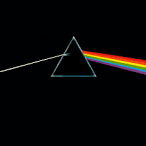 1987A Momentary Lapse of Reason
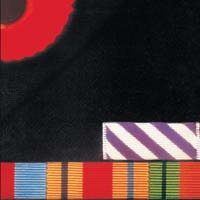 1983The Final Cut
 1979The Wall
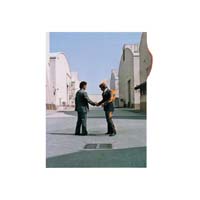 1975Wish You Were Here
 1971Meddle
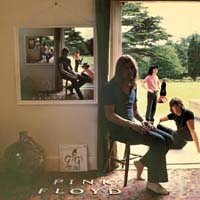 1969Ummagumma
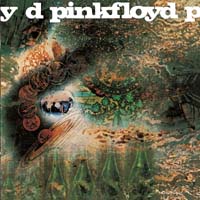 1968A Saucerful of Secrets
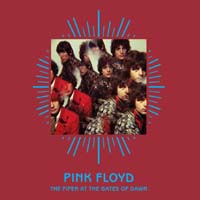 1967The Piper at the Gates of Dawn