
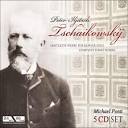
Piotr Ilich Tchaikovski – Symphonie Espagnole / Sérénade Mélancolique: track-by-track perspective
Symphonie Espagnole / Sérénade Mélancolique- Album Overview
The album "Symphonie Espagnole / Sérénade Mélancolique" features works by the renowned Russian composer Piotr Ilich Tchaikovsky, released in 1880. It is a collection of orchestral compositions that showcases Tchaikovsky's melodic and harmonic brilliance. The "Symphonie Espagnole," a five-movement work for violin and orchestra, was composed in 1874 and is widely recognized for its vibrant Spanish themes and virtuosic violin passages. It was commissioned by the famous violinist Pablo de Sarasate, who premiered it in 1875. The piece reflects Tchaikovsky's fascination with folk music and dance rhythms, offering a rich tapestry of emotional depth and technical prowess. The "Sérénade Mélancolique," composed in 1875, stands as a poignant work for violin and orchestra, highlighting Tchaikovsky's lyrical style. This piece, often overshadowed by his more famous compositions, is a testament to his ability to convey deep emotions through music. Both works are characterized by Tchaikovsky's unique ability to blend Russian musical elements with Western classical traditions. The album features various orchestras and conductors, with notable recordings by the London Symphony Orchestra and the Royal Philharmonic Orchestra. Released under the Decca label, the album has been a critical addition to Tchaikovsky's discography, celebrated for its rich orchestration and emotional resonance. Throughout the years, these pieces have remained staples in the violin repertoire and continue to be performed worldwide, showcasing the enduring legacy of Tchaikovsky's contributions to classical music.
Review
"Symphonie Espagnole / Sérénade Mélancolique" offers listeners a captivating journey through Tchaikovsky's emotive soundscapes. The "Symphonie Espagnole" is a brilliant showcase for the solo violin, blending elements of Spanish folk music with Tchaikovsky's lush orchestration. The first movement bursts with energy, while the subsequent movements explore a spectrum of emotions, from exuberance to introspection. Tchaikovsky's masterful handling of the orchestra allows the violin to shine, weaving seamlessly through intricate passages and soaring melodies. The "Sérénade Mélancolique" is an exquisite work filled with longing and nostalgia, perfectly illustrating Tchaikovsky's ability to evoke deep feelings through music. The lush orchestral textures, combined with the hauntingly beautiful violin lines, create a poignant experience for the listener. Throughout both works, Tchaikovsky's signature style emerges, characterized by sweeping melodies, rich harmonies, and rhythmic vitality. Overall, the album captures the essence of Tchaikovsky's artistic vision—melding technical brilliance with profound emotional depth. The recordings exhibit clarity and warmth, allowing the listener to fully appreciate the intricate interplay between the soloist and the orchestra.
Highlights
- Stunning violin performances that showcase technical prowess and emotional depth.
- Rich orchestral textures that enhance the overall listening experience.
- Melodic and harmonic brilliance characteristic of Tchaikovsky's compositions.
Weak points
- Some listeners may find the "Sérénade Mélancolique" less engaging compared to the more dynamic "Symphonie Espagnole."
- The album might be overshadowed by Tchaikovsky's more famous works.
- Occasional orchestral balance issues in certain recordings.
Overall evaluation
"Symphonie Espagnole / Sérénade Mélancolique" is a compelling addition to Tchaikovsky's oeuvre, showcasing his unparalleled ability to blend technical skill with emotional storytelling. It remains a beloved collection for both classical music aficionados and casual listeners alike.
Personal rating: 8.5/10