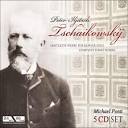
ALBUM NOTESUnpacking Piotr Ilich Tchaikovski's 1812 Overture
1812 Overture- Album Overview
The "1812 Overture," composed by Piotr Ilich Tchaikovsky in 1880, is one of the most celebrated orchestral works in classical music. Originally written to commemorate Russia's defense against Napoleon's Grande Armée in 1812, the piece is a fusion of Russian folk themes and classical compositional techniques. The overture was commissioned for the Cathedral of Christ the Saviour in Moscow and premiered there on August 20, 1882.
The work is known for its innovative orchestration, featuring cannon fire and church bells, which gives it a unique sound that represents the tumult of battle. The overture has been recorded by various orchestras and ensembles, with significant interpretations by conductors such as Leonard Bernstein and Herbert von Karajan. The recording by the London Symphony Orchestra under the baton of André Previn in 1979 is particularly noteworthy, showcasing the grandeur and emotional depth of Tchaikovsky’s composition.
Released under the RCA Red Seal label, the "1812 Overture" has since become a staple of the classical repertoire, often performed at patriotic celebrations and Fourth of July events in the United States. Its cultural significance extends beyond the concert hall, as it has been featured in films, commercials, and various media, reinforcing its status as a symbol of triumph and resilience.
Review
The "1812 Overture" is a masterful blend of thematic development and dramatic orchestration. Tchaikovsky's ability to weave together the majestic themes of the Russian national anthem with the somber notes of "God Save the Tsar" creates an emotional tapestry that resonates with listeners. The piece begins with a serene introduction, gradually building in intensity until it explodes into the climactic battle scenes, punctuated by the sound of cannon fire and ringing bells.
Tchaikovsky's artistic vision is evident in how he captures the chaos of war and the ensuing triumph of peace. The overture’s final section, marked by jubilant melodies and a powerful brass section, provides a sense of resolution and victory that is both exhilarating and uplifting. However, some may argue that the overture leans towards a formulaic structure, with its predictable climaxes. Nevertheless, the sheer power of the orchestration and the emotional weight it carries make it a timeless piece that continues to captivate audiences.
Highlights
- The innovative use of cannon fire and bells creates a unique auditory experience.
- The emotional depth and thematic richness resonate with listeners across generations.
- Tchaikovsky's masterful orchestration showcases his genius in blending folk elements with classical traditions.
Weak points
- The overture can be seen as overly dramatic or bombastic for some listeners.
- Its popularity may overshadow lesser-known works by Tchaikovsky that deserve attention.
- The structure may feel predictable to those familiar with classical music conventions.
Overall evaluation
The "1812 Overture" stands as a testament to Tchaikovsky’s compositional brilliance, combining historical significance with musical innovation. It remains a beloved piece in the classical canon, able to evoke strong emotions and convey a powerful narrative.
Personal rating: 9/10