
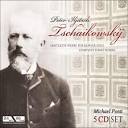
Inside the atmosphere of Piotr Ilich Tchaikovski's Suite No. 3 In G Major, Op. 55
Suite No. 3 In G Major, Op. 55- Album Overview
Piotr Ilich Tchaikovsky's "Suite No. 3 in G Major, Op. 55" is a seminal piece in the classical repertoire, composed in 1884. This suite is notable for its rich orchestration and melodic inventiveness, showcasing Tchaikovsky's unique ability to blend emotional depth with technical mastery. The suite comprises four movements: I. "Marche miniature," II. "Valse," III. "Scherzo," and IV. "Nocturne," culminating in a vibrant "Finale." The work was commissioned for the 1884 concert season by the Saint Petersburg Philharmonic Orchestra, and it premiered in the same year under the baton of the esteemed conductor, Eduard Nápravník.
Tchaikovsky's "Suite No. 3" was released under the label of multiple recording companies over the years, including RCA Victor and Deutsche Grammophon. The enduring popularity of this suite can be attributed to its emotional resonance and the varied orchestral textures that Tchaikovsky employs. Unlike his ballets and symphonies, the suite format allows for a more intimate exploration of themes and motifs, making it a favorite among musicians and audiences alike. The suite's cultural significance is underscored by its frequent performances in concert halls worldwide and its presence in the orchestral canon, illustrating Tchaikovsky's lasting influence on the classical music landscape.
Review
In "Suite No. 3 in G Major," Tchaikovsky manages to encapsulate a wide array of emotions within a relatively compact framework. The work opens with a "Marche miniature," which sets a playful yet sophisticated tone, immediately drawing the listener into Tchaikovsky's whimsical world. The second movement, a "Valse," contrasts this with its elegance and lyrical beauty, showcasing the composer’s gift for melody. The "Scherzo" injects a lively energy, characterized by brisk tempos and intricate orchestral interplay, while the "Nocturne" offers a moment of introspective calm, highlighting Tchaikovsky's ability to convey deep emotion through music.
The final movement, "Finale," wraps the suite with a sense of triumph and exuberance, bringing back themes from earlier movements and weaving them into a celebratory conclusion. The orchestration throughout is masterful, with Tchaikovsky utilizing the full spectrum of orchestral colors to enhance the emotional weight of each passage. This suite stands as a testament to Tchaikovsky's genius, offering listeners both joy and reflection, making it a crucial part of his oeuvre.
Highlights
- Masterful orchestration that showcases Tchaikovsky's unique sound palette.
- Memorable melodies that resonate with listeners across generations.
- A compelling emotional journey through varied movements.
Weak points
- The suite may feel less cohesive compared to Tchaikovsky's larger works, such as his symphonies.
- Some listeners may find the tonal shifts between movements jarring.
- Occasional predictability in melodic development could detract from the overall impact.
Overall evaluation
"Suite No. 3 in G Major, Op. 55" is a remarkable work that highlights Tchaikovsky's capacity for emotional storytelling through music. While it may not possess the same grandeur as his ballets or symphonic works, it remains a delightful exploration of sound and sentiment.
Personal rating: 8/10