
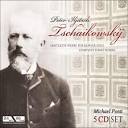
A closer look at Piotr Ilich Tchaikovski's album Klavierkonzert Nr. 1
Klavierkonzert Nr. 1- Album Overview
Piotr Ilich Tchaikovsky's "Klavierkonzert Nr. 1," or Piano Concerto No. 1 in B-flat minor, Op. 23, was composed between 1874 and 1875 and premiered in 1875 in Boston, conducted by the composer himself. This iconic piece was produced during a pivotal time in Tchaikovsky's career, marking a shift toward international recognition. The concerto is known for its rich emotional depth, intricate melodies, and innovative orchestration. It was published by the music publisher Jurgenson, and it quickly became one of Tchaikovsky's most popular works, still regularly performed in concert halls around the world.
The composition features three movements: the dramatic "Allegro non troppo," the melancholic "Andantino semplice," and the vibrant "Allegro con fuoco." Tchaikovsky's collaboration with prominent soloists has also contributed to the concerto's enduring popularity, with many renowned pianists interpreting the work, including Sergei Rachmaninoff, Martha Argerich, and more recently, Yuja Wang. The concerto's famous opening theme has become a hallmark of classical music, often associated with romanticism and virtuosity.
The cultural significance of "Klavierkonzert Nr. 1" cannot be overstated; it has influenced countless musicians and composers and has been used in various films and media. Its combination of technical brilliance and emotional expressiveness has made it a staple in the classical music repertoire, showcasing Tchaikovsky's innovative approach to structure and thematic development.
Review
Tchaikovsky's "Klavierkonzert Nr. 1" is a remarkable blend of technical prowess and lyrical beauty, embodying the spirit of romanticism. The concerto opens with a powerful orchestral introduction, leading to the piano's assertive entrance, showcasing the pianist's dexterity and emotional range. Throughout the piece, Tchaikovsky expertly balances the dialogue between the piano and orchestra, creating a dynamic interplay that keeps the listener engaged.
The second movement, "Andantino semplice," stands out with its hauntingly beautiful melody, inviting introspection and showcasing Tchaikovsky's ability to evoke deep emotion. The final movement bursts forth with vigor, featuring rapid passages and exhilarating rhythms that highlight the pianist's virtuosity. Overall, the concerto reflects Tchaikovsky's mastery of form and his ability to convey a wide range of emotions, making it a timeless work that resonates with audiences across generations.
Highlights
- Memorable themes that have become iconic in classical music.
- A perfect balance between technical brilliance and emotional depth.
- Rich orchestration that enhances the piano's role within the ensemble.
Weak points
- Some interpretations may lean too heavily on virtuosity, overshadowing emotional nuance.
- The length of the concerto may be daunting for some listeners.
- Occasional over-reliance on dramatic contrasts might disrupt the flow for certain interpretations.
Overall evaluation
In conclusion, Tchaikovsky's "Klavierkonzert Nr. 1" is a quintessential work of the classical repertoire that beautifully marries technical skill with deep emotional expression. Its enduring popularity is a testament to its brilliance and impact on the world of music.
Personal rating: 9/10