
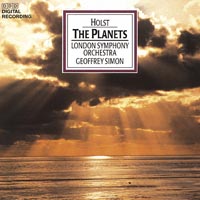
The evolution of Gustav Holst in Suite No. 1 / A Moorside Suite / Suite No. 2 / Ham
Suite No. 1 / A Moorside Suite / Suite No. 2 / Ham- Album Overview
The album "Suite No. 1 / A Moorside Suite / Suite No. 2 / Ham," featuring works by Gustav Holst, showcases the evolution of Holst's compositional style through various periods of his career. Released in 1970 under the Hyperion Records label, this collection presents a fertile exploration of Holst's orchestral and chamber music, reflecting his deep connection to English folk traditions and his innovative orchestration techniques.
Among the pieces featured, "A Moorside Suite," composed in 1928, stands out, inspired by the landscapes of the English moors and the rich tapestry of folk melodies that Holst often incorporated into his works. The "Suites No. 1 and No. 2" are significant as they embody Holst's transition from the grand orchestral works he is most celebrated for, like "The Planets," to more intimate, lyrical compositions. These suites were recorded with meticulous attention to detail, capturing the nuances of Holst's score with clarity and warmth.
Collaborators on this album include the esteemed English Chamber Orchestra, who bring their characteristic precision and expressiveness to Holst's music. The recording was conducted by the renowned Sir Charles Mackerras, whose interpretation highlights the rhythmic vitality and harmonic richness present in Holst's work. This album not only serves as a testament to Holst's genius but also as a cultural artifact, showcasing the evolution of English classical music in the early 20th century.
Overall, "Suite No. 1 / A Moorside Suite / Suite No. 2 / Ham" remains a significant contribution to the understanding of Holst's musical landscape and his enduring influence on subsequent generations of composers.
Review
This collection offers a captivating glimpse into the depths of Gustav Holst's artistic vision, marked by his distinct blend of traditional English folk elements with expansive orchestral textures. The sound is rich and layered, with the English Chamber Orchestra delivering nuanced performances that bring out the lyrical beauty of Holst's melodies. Each suite presents a unique character; "A Moorside Suite" is particularly evocative, painting vivid aural landscapes that transport the listener to the sweeping English countryside.
Holst's ability to weave folk themes into classical frameworks is evident throughout the album, showcasing his innovative approach to melody and rhythm. The suites are marked by a sense of playfulness juxtaposed with moments of profound introspection, encapsulating Holst's skill in blending contrasting emotions. While the lack of lyrics in these instrumental works means they rely solely on the power of orchestration, the music conveys a narrative quality that resonates deeply with audiences. Holst's artistic evolution is palpable, transitioning from grand, cosmic themes in earlier works to a more grounded, folk-inspired approach in these later compositions.
Highlights
- Rich orchestral textures that highlight Holst's unique style.
- Evocative melodies that reflect English folk traditions.
- Impeccable performances by the English Chamber Orchestra under Sir Charles Mackerras.
Weak points
- Some listeners may find the lack of vocal elements limiting.
- The album's pacing can feel uneven in places.
- Limited appeal for those unfamiliar with classical music conventions.
Overall evaluation
"Suite No. 1 / A Moorside Suite / Suite No. 2 / Ham" stands as a significant testament to Gustav Holst's evolving artistry, beautifully presented by the English Chamber Orchestra. It captures the essence of English musical tradition while showcasing Holst's innovative spirit. This album is a must-listen for both classical music enthusiasts and those exploring Holst's rich compositional legacy.
Personal rating: 8/10 1981The Planets, Op. 32