
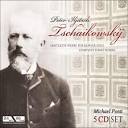
Piotr Ilich Tchaikovski – Sérénade En Ut Majeur: track-by-track perspective
Sérénade En Ut Majeur- Album Overview
"Sérénade En Ut Majeur," composed by the celebrated Russian composer Piotr Ilich Tchaikovsky, was completed in 1880. This exquisite piece is a prime example of Tchaikovsky's ability to blend lyrical melodies with rich orchestration, embodying the Romantic musical style. The work was first premiered by the Vienna Philharmonic and has since been performed by numerous orchestras around the world. The composition is typically scored for a string orchestra and is subdivided into four distinct movements: "Pezzo in forma di Sonatina," "Valse," "Élégie," and "Finale." The Serenade was published by the Russian music publisher P. Jurgenson and has been a staple in orchestral repertoire since its release. Tchaikovsky's intricate use of harmony and counterpoint is paramount in this piece, as he showcases not only the technical virtuosity of the musicians but also their emotional expressiveness. The work reflects Tchaikovsky's admiration for the classical traditions of Mozart and other composers while infusing his signature emotional depth. "Sérénade En Ut Majeur" holds significant cultural importance as it encapsulates the essence of Russian Romanticism, influencing countless musicians and composers in the years that followed.
Review
The "Sérénade En Ut Majeur" is a masterful amalgamation of lyrical beauty and technical brilliance, showcasing Tchaikovsky's deep understanding of the string orchestra's capabilities. The first movement, with its sonatina form, introduces a theme that is both memorable and haunting, setting the emotional tone for the entire work. The second movement, "Valse," is a delightful waltz that captures the lightness and grace characteristic of Tchaikovsky's ballets. The "Élégie," the third movement, is particularly poignant, featuring a sorrowful melody that resonates with the listener. It is here that Tchaikovsky's ability to evoke emotion is most evident, as the strings weave a narrative of longing and introspection. Finally, the "Finale" bursts forth with exuberance, bringing the piece to a thrilling conclusion. Overall, the Serenade is a testament to Tchaikovsky's genius, blending rich thematic material with intricate orchestration, resulting in a work that is both technically challenging and deeply moving.
Highlights
- Rich orchestration that showcases the beauty of strings.
- Memorable melodies that linger long after listening.
- Emotional depth that resonates with both performers and audiences.
Weak points
- Some movements may feel overly sentimental to certain listeners.
- The structure can seem predictable for seasoned classical music enthusiasts.
- Limited variety in instrumentation may detract from some listeners' experience.
Overall evaluation
Tchaikovsky's "Sérénade En Ut Majeur" stands as a cornerstone of the Romantic repertoire, blending emotional depth with technical prowess. It is a work that invites both admiration and introspection, making it a timeless piece for orchestras around the world.
Personal rating: 9/10