
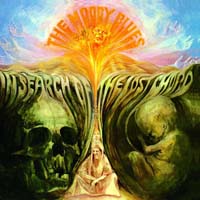
From intro to finale: what In Search of the Lost Chord delivers
In Search of the Lost Chord- Album Overview
"In Search of the Lost Chord," released in 1968, is the third studio album by the British rock band The Moody Blues. This concept album, released under the Deram Records label, marks a significant evolution in the band's sound, blending rock with orchestral and progressive elements. The album was recorded at Decca Studios in London, with the band's line-up consisting of Justin Hayward, John Lodge, Graeme Edge, Mike Pinder, and Ray Thomas. The production was a collaborative effort, with contributions from producer Tony Clarke, who helped shape the band's lush soundscapes.
The album features the hit single "Ride My See-Saw," which showcases the band's trademark fusion of rock and classical influences, and is an essential feature of their live performances. Other notable tracks include "Voices in the Sky" and "The Actor," which further demonstrate the band's lyrical depth and sonic experimentation. Thematically, the album explores the search for enlightenment and self-discovery, echoing the cultural zeitgeist of the late 1960s, a period marked by a growing interest in spirituality and Eastern philosophies.
"In Search of the Lost Chord" is often regarded as an important milestone in the progressive rock genre, paving the way for future artists to explore more complex musical structures and thematic narratives. Its lush production and innovative use of instruments like the Mellotron and flute have left a lasting impact on the music scene, influencing a wide array of genres and artists.
Review
The sound of "In Search of the Lost Chord" is a rich tapestry of melodies that intertwine rock, classical, and psychedelic influences. The album opens with "Departure," which sets a contemplative tone, leading into "Ride My See-Saw," a track that blends upbeat energy with philosophical lyrics. Lyrically, the album reflects a deep introspection, particularly in tracks like "Voices in the Sky," where the themes of searching and existential inquiry resonate strongly. The band’s use of orchestration complements the lyrical depth, creating an immersive listening experience.
The artistic vision of The Moody Blues during this period was one of ambition and exploration. They were not just musicians but rather storytellers, inviting listeners on a journey through sound. The incorporation of various instruments, including the use of the Mellotron, adds an ethereal quality to the music, making it both innovative and timeless. However, some tracks may feel overly ambitious, as the band pushes the boundaries of traditional rock, which can alienate listeners looking for more straightforward compositions.
Highlights
- The successful fusion of rock and orchestral elements.
- Thought-provoking lyrics that explore themes of self-discovery.
- The innovative use of the Mellotron, enhancing the album's atmospheric quality.
Weak points
- Some tracks may feel overly ambitious or meandering.
- Occasional lack of cohesion in the album's flow.
- Not all songs resonate equally with listeners.
Overall evaluation
"In Search of the Lost Chord" remains a landmark album in The Moody Blues' discography and the progressive rock genre as a whole. Its blend of introspective lyrics and innovative soundscapes captures the essence of a transformative era in music. While it may not appeal to everyone, its artistic ambition and production quality are undeniable.
Personal rating: 8/10 2003December
 1981Long Distance Voyager
 1972Seventh Sojourn
 1971Every Good Boy Deserves Favour
 1970A Question of Balance
 1969On the Threshold of a Dream
 1967Days of Future Passed