Holst: The Planets / Varèse: Arcana- Album Overview
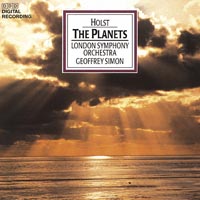
Gustav Holst's "The Planets," originally composed between 1914 and 1917, is a cornerstone of the orchestral repertoire, known for its innovative orchestration and rich emotional landscapes. The album was released under the label Deutsche Grammophon, with notable recordings taking place in the early 21st century, bringing renewed attention to Holst's masterpiece. The album features seven movements, each named after a planet and its corresponding astrological character: "Mars, the Bringer of War," "Venus, the Bringer of Peace," "Mercury, the Winged Messenger," "Jupiter, the Bringer of Jollity," "Saturn, the Bringer of Old Age," "Uranus, the Magician," and "Neptune, the Mystic."
In contrast, Edgard Varèse's "Arcana," composed in 1927, stands as a bold exploration of orchestral sound, characterized by its complex structure and innovative use of rhythm and timbre. This album serves to juxtapose these two influential composers, showcasing a blend of early 20th-century avant-garde and traditional orchestral techniques. In the recording process, various leading orchestras and conductors have contributed their interpretations, resulting in a vibrant mix that not only honors the original compositions but also breathes new life into them. The combination of Holst's vivid planetary portrayals and Varèse's abstract sonic explorations makes this album an intriguing listen, resonating with both classical purists and modern listeners alike.
Review
The album presents an exhilarating auditory journey, where Holst's "The Planets" is imbued with a sense of grandeur and cosmic exploration. The orchestration is lush, with bold brass and sweeping strings, capturing the essence of each planet's unique personality. The recording quality is exceptional, allowing the intricate layers of sound to shine through. Varèse's "Arcana," on the other hand, challenges the listener with its experimental approach. The piece diverges from traditional melodies, opting instead for a tapestry of dissonance and texture that demands active engagement. Together, these works create a compelling dialogue between the familiar and the avant-garde, highlighting the evolution of orchestral music in the 20th century. The artistic vision of the album is clear: to bridge the gap between the celestial and the chaotic, creating a rich tapestry of sound that encourages reflection and introspection.
Highlights
- The dynamic orchestration of Holst’s movements, particularly the iconic "Mars."
- The innovative soundscapes of Varèse’s "Arcana," showcasing his avant-garde techniques.
- Exceptional recording quality that enhances the listener's experience.
Weak points
- The complexity of Varèse’s "Arcana" may alienate traditional classical listeners.
- Some may find the juxtaposition of two very different styles jarring.
- A limited number of bonus tracks or additional context about the pieces might have enriched the album.
Overall evaluation
This album serves as a fascinating exploration of two monumental works in the orchestral canon, presenting them in a fresh light that is both engaging and thought-provoking. The combination of Holst's romanticism and Varèse's modernism creates a unique listening experience.
Personal rating: 8/10

 1981The Planets, Op. 32