
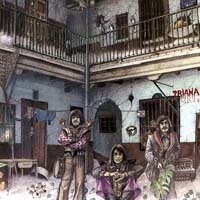
Triana raises the bar with Un jardín eléctrico
Un jardín eléctrico- Album Overview
"Un jardín eléctrico," released in 1978, is the third studio album by the Spanish progressive rock band Triana. This album showcased the band's unique blend of flamenco, rock, and jazz, solidifying their status within the progressive rock genre. Produced by the band themselves and released under the label Hispavox, the album represents a critical evolution in their sound, characterized by intricate guitar work, rich synthesizers, and a fusion of traditional Spanish music with contemporary rock elements. The recording took place during a period of significant cultural change in Spain, which heavily influenced the band's artistic vision.
The album features notable tracks such as "En el lago," "La sombra," and "El vuelo del burgués," each contributing to the overall narrative of the album. "Un jardín eléctrico" is celebrated for its poetic lyrics, primarily written by lead vocalist Jesús de la Rosa, touching on themes of love, nature, and existential reflection. Collaborations with other musicians, including the innovative use of the Moog synthesizer, further enhanced the production, making it a landmark album in the Andalusian rock scene. The singles released from the album helped to cement Triana's popularity in Spain, and the album remains influential, inspiring future generations of musicians.
Review
The sound of "Un jardín eléctrico" is a testament to Triana's ambition and creativity. The album opens with "En el lago," which immediately sets a tranquil yet captivating tone with its lush instrumentation. The seamless integration of flamenco guitar with electric rock elements creates a soundscape that is both familiar and innovative. Lyrically, Triana's approach is introspective and evocative, often drawing on natural imagery that resonates deeply with listeners.
Throughout the album, the band's ability to evoke emotion through their music is striking. The arrangements are complex without feeling overindulgent, showcasing the band's technical proficiency while still prioritizing melody and atmosphere. Jesús de la Rosa's passionate vocals serve as a focal point, guiding the listener through the album's journey. The artistic vision behind "Un jardín eléctrico" is reflective of the broader cultural shifts occurring in Spain at the time, making it not only a musical achievement but also a cultural artifact.
Highlights
- Innovative fusion of flamenco and progressive rock.
- Emotionally resonant lyrics that explore deep themes.
- Exceptional musicianship, particularly in guitar and keyboard arrangements.
Weak points
- Some tracks may feel lengthy for casual listeners.
- Production quality varies across tracks.
- Not all themes resonate equally with every listener.
Overall evaluation
"Un jardín eléctrico" stands as a pivotal work in Triana's discography, showcasing their ability to blend various musical styles and create a cohesive, immersive experience. While it may not appeal to everyone due to its length and production nuances, the album offers a rewarding listen for those willing to explore its depths.
Personal rating: 8/10 1979Sombra y luz
 1977Hijos del agobio
 1975El patio