
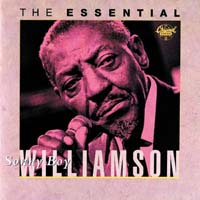
Sonny Boy Williamson II experiments boldly on The Bluebird Blues
The Bluebird Blues- Album Overview
"The Bluebird Blues," released in 1951, is a seminal album by the influential blues harmonica player and singer Sonny Boy Williamson II, whose real name was Aleck Ford. The album was recorded for the Bluebird Records label and features a collection of tracks that showcase Williamson's distinctive voice and masterful harmonica playing. This album is part of his extensive catalog that helped define the Chicago blues sound in the post-war era. The recording sessions took place in Chicago, a hub for the blues genre, and Williamson collaborated with an array of talented musicians, including notable guitarists and rhythm sections that contributed to the album's rich sound. The tracks on "The Bluebird Blues" reflect Williamson's innovative approach to blues music, integrating elements of jazz and swing into traditional blues frameworks. Notable songs such as "Eyesight to the Blind" and "The Key to the Highway" exemplify his lyrical storytelling and emotive delivery. The album's singles received considerable airplay on radio stations, further solidifying Williamson's status in the blues community. The cultural significance of "The Bluebird Blues" lies in its ability to bridge the gap between the rural Delta blues and the urban Chicago blues, influencing countless musicians who followed in Williamson's footsteps. His work on this album continues to resonate in the blues genre, marking it as a crucial piece of music history.
Review
Sonny Boy Williamson II's "The Bluebird Blues" stands as a bold testament to the evolution of blues music in the early 1950s. Williamson's unique sound, characterized by his expressive harmonica playing and soulful vocals, creates a captivating listening experience. The album deftly balances traditional blues elements with experimental techniques that push the genre's boundaries. Lyrically, Williamson dives into themes of love, heartache, and the struggles of everyday life, resonating deeply with listeners. His storytelling ability is a hallmark of this album, engaging audiences with relatable narratives. The instrumentation throughout the album is equally impressive, featuring dynamic guitar riffs and a tight rhythm section that complements Williamson's vocal prowess. Williamson's artistic vision is evident in the way he blends various musical influences, crafting a sound that feels both timeless and innovative. While the production quality reflects the era's limitations, it adds an authentic charm to the recordings, allowing the raw emotions to shine through. Overall, "The Bluebird Blues" is a bold exploration of sound that showcases Williamson's mastery of his craft.
Highlights
- Innovative blend of traditional and modern blues styles.
- Strong lyrical storytelling that resonates with listeners.
- Exceptional harmonica playing that showcases Williamson's virtuosity.
Weak points
- Production quality may feel dated to some modern listeners.
- Some tracks may not fully capture the energy of Williamson's live performances.
- Limited variety in instrumental arrangements across the album.
Overall evaluation
Sonny Boy Williamson II's "The Bluebird Blues" is a crucial album that encapsulates the essence of early Chicago blues while pushing the genre's boundaries. Despite minor flaws, it remains a compelling listen for both blues aficionados and newcomers alike.
Personal rating: 8/10