
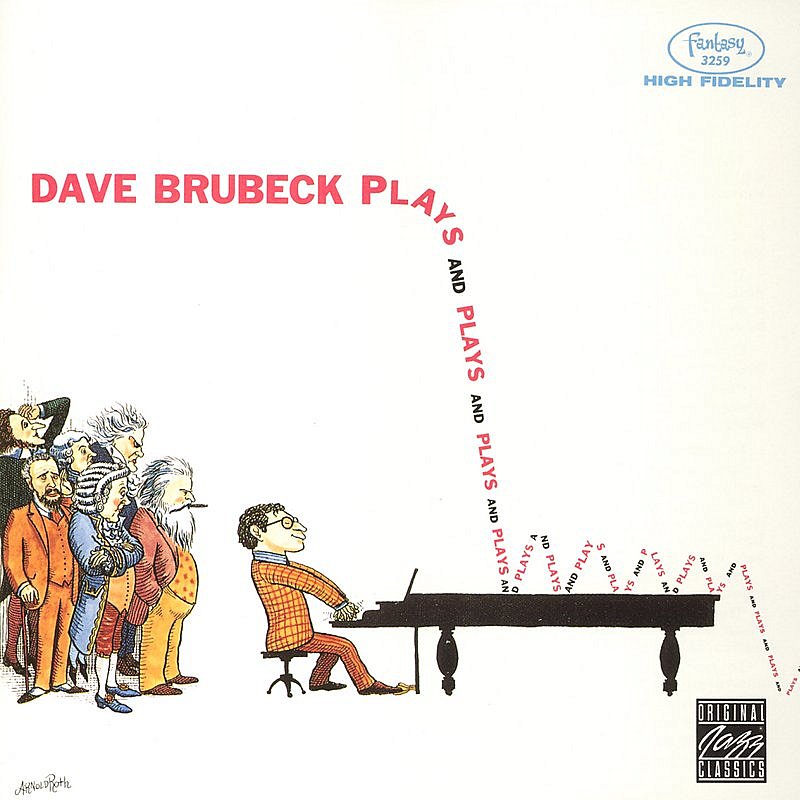
Listening guide: Dave Brubeck's Take Five
Take Five- Album Overview
"Take Five," released in 1959, is one of the most celebrated jazz albums by the Dave Brubeck Quartet, showcasing the innovative spirit of the era. Released under the Columbia Records label, it features the iconic title track "Take Five," composed by saxophonist Paul Desmond. The album was a product of its time, recorded during a period when jazz was evolving, and Brubeck was at the forefront of this transformation, fusing classical elements with jazz improvisation.
The album was recorded in 1959 at Columbia's 30th Street Studio in New York City. Brubeck's quartet, comprising Paul Desmond on alto saxophone, Eugene Wright on bass, and Joe Morello on drums, contributed to a unique sound characterized by intricate time signatures and melodic improvisation. "Take Five," with its signature 5/4 time signature, became an unexpected commercial success, bringing jazz into the mainstream. It is often credited with introducing a broader audience to jazz music, paving the way for future generations of musicians.
The album not only includes the titular track but also features other noteworthy compositions such as "Blue Rondo à la Turk," "Strange Meadow Lark," and "Take the 'A' Train." Each track exemplifies the quartet's ability to blend complex rhythms with accessible melodies, making it a rich listening experience. "Take Five" has been recognized as a cultural landmark, influencing countless artists across various genres and solidifying Brubeck's legacy as one of jazz's great innovators.
Review
The sound of "Take Five" is a masterclass in jazz composition and improvisation. Brubeck's piano work shines, characterized by its clarity and rhythmic complexity, while Desmond's smooth saxophone melodies offer a perfect counterbalance. The interplay between the musicians is seamless, showcasing their virtuosity and deep understanding of jazz's improvisational nature. The album's unique time signatures, particularly in "Take Five," challenge traditional jazz conventions and invite listeners to experience the genre in a refreshing way.
While the album lacks lyrics, the emotional depth and musical storytelling are palpable. Each track paints a vivid picture, from the playful energy of "Blue Rondo à la Turk" to the introspective feel of "Strange Meadow Lark." Brubeck's artistic vision on this album transcends traditional jazz boundaries, creating a sound that appeals to both jazz aficionados and casual listeners alike. The overall production quality is immaculate, capturing the essence of each instrument and the chemistry of the quartet.
Highlights
- The groundbreaking use of time signatures, particularly in the title track.
- The seamless interplay between Brubeck's piano and Desmond's saxophone.
- The album's ability to attract a diverse audience to jazz music.
Weak points
- Some listeners may find the complex time signatures challenging to appreciate fully.
- The lack of vocal tracks may deter those who prefer lyrical content.
- As a studio album, it may not capture the spontaneous energy of a live performance.
Overall evaluation
"Take Five" remains a cornerstone of jazz music, celebrated for its innovation and artistic brilliance. Its influence continues to resonate in contemporary music, making it essential listening for anyone interested in the evolution of jazz.
Personal rating: 9/10