ALBUM NOTESInside the atmosphere of Luciano Pavarotti's Lucia Di Lammermoor
Lucia Di Lammermoor- Album Overview
Luciano Pavarotti's "Lucia Di Lammermoor," released in 1979, is a compelling recording of Gaetano Donizetti's renowned opera. The album was produced by Decca Records, a label synonymous with classical music excellence. This rendition captures the dramatic essence of the story, which revolves around the tragic love of Lucia and Edgardo, steeped in themes of madness and betrayal. Pavarotti's interpretation of the role of Edgardo is particularly notable, showcasing his signature tenor voice that combines power with lyrical finesse.
The recording features the Philharmonia Orchestra and is conducted by the esteemed Richard Bonynge, who is known for his expertise in the bel canto repertoire. The album includes standout arias such as "Tombe degli avi miei" and "Di quella pira," both of which have become staples in the operatic canon. Pavarotti's partnership with soprano Joan Sutherland, who plays the role of Lucia, adds another layer of depth and richness to the performance, creating a captivating interplay between the two leads.
The album not only highlights Pavarotti's vocal prowess but also serves as a cultural touchstone for opera enthusiasts. It encapsulates the emotional intensity of Donizetti's work, presenting it to a wider audience during a period when opera was experiencing a resurgence in popularity. Pavarotti’s performance in "Lucia Di Lammermoor" remains influential, inspiring generations of opera singers and lovers alike.
Review
Pavarotti's "Lucia Di Lammermoor" is nothing short of a sonic masterpiece. His voice resonates throughout the album, capturing both the fragility and strength of his character, Edgardo. The orchestral arrangement, conducted masterfully by Bonynge, complements the emotional landscape of the opera, allowing Pavarotti's voice to soar above the lush instrumentation.
The album's production quality is stellar, with every note and nuance meticulously captured, making it an excellent representation of 20th-century opera recordings. Pavarotti's ability to convey deep emotion through his vocal delivery is particularly evident in the famous arias, where he navigates the technical demands with grace. His phrasing and breath control are exemplary, immersing listeners in the narrative's tragic depths.
However, while the collaboration with Sutherland enhances the album, some listeners may find the pacing of the opera's overall narrative somewhat uneven. Despite this, Pavarotti's artistry shines brightly, making it a compelling listen for both seasoned opera fans and newcomers to the genre.
Highlights
- Pavarotti's exceptional vocal technique and emotional depth.
- Rich orchestral arrangements by the Philharmonia Orchestra.
- Strong performance chemistry with soprano Joan Sutherland.
Weak points
- Some may find the pacing of the narrative uneven.
- Occasional lack of dramatic intensity in ensemble pieces.
- Limited appeal to those unfamiliar with opera conventions.
Overall evaluation
Luciano Pavarotti's "Lucia Di Lammermoor" is a quintessential recording that showcases the tenor's extraordinary talent and the emotive power of opera. It stands as a testament to the artistry of both Pavarotti and Donizetti, offering a rich listening experience that resonates with audiences.
Personal rating: 9/10


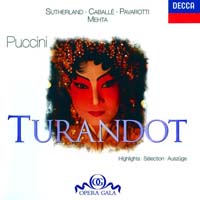 1972Turandot