
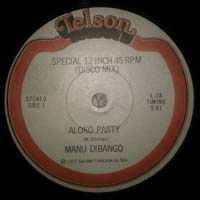
The evolution of Manu Dibango in Deliverance
Deliverance- Album Overview
"Deliverance," released in 1988, marks a significant chapter in the illustrious career of Cameroonian saxophonist and vibraphonist Manu Dibango. The album was released under the label "SABA," a subsidiary of the renowned French label "SACEM." Known for his ability to blend jazz, funk, and traditional African music, Dibango’s work on this album showcases his unique style and musical evolution. The recording sessions took place in Paris, where Dibango collaborated with a variety of talented musicians, contributing to the rich soundscape of the album.
"Deliverance" features a mix of instrumental and vocal tracks that highlight Dibango’s ability to transcend genres. The album includes standout tracks such as "Moulin Rouge" and "Africa," which resonate with themes of cultural pride and social commentary, reflective of his roots. Dibango's innovative approach combines traditional African rhythms with contemporary jazz influences, making the album a significant cultural artifact of its time. The album's production is polished yet retains an authentic feel, allowing Dibango's expressive saxophone to shine through.
The singles released from the album, while not chart-topping hits, received considerable airplay in niche music circles, further establishing Dibango's influence in world music. "Deliverance" is not just an album but a reflection of Dibango's journey as an artist, portraying a narrative that interweaves his personal experiences with broader cultural themes, making it a must-listen for fans of jazz and world music alike.
Review
"Deliverance" is a testament to Manu Dibango's mastery as a musician who seamlessly bridges the gap between African heritage and contemporary sounds. The album opens with an invigorating energy, instantly drawing listeners into Dibango's world. His saxophone work is intricate yet accessible, providing a melodic foundation that supports the diverse instrumentation throughout the album. The lyrics, where present, are poignant and reflective, often touching on themes of identity and belonging, resonating deeply in the cultural and social context of the late 1980s.
The production quality is impressive, with a clean mix that allows each instrument to breathe while showcasing the rhythmic complexity characteristic of African music. Dibango’s artistic vision is evident as he experiments with different sounds and styles, pushing the boundaries of his genre. However, some may find that the album’s eclectic nature sometimes lacks cohesion, veering into musical territories that might not appeal to all listeners. Nonetheless, "Deliverance" remains a powerful exploration of music's ability to connect cultures and generations.
Highlights
- Innovative blend of jazz, funk, and African music.
- Intricate saxophone melodies that showcase Dibango's virtuosity.
- Culturally rich themes that resonate with a diverse audience.
Weak points
- Some tracks may feel disjointed due to genre shifts.
- Not all songs achieve the same level of impact; a few feel less memorable.
- Lack of mainstream hits might limit broader audience appeal.
Overall evaluation
"Deliverance" is a remarkable exploration of Manu Dibango's evolution as a musician and cultural ambassador. It encapsulates his ability to unite diverse musical traditions while remaining rooted in his African identity. Though it has its shortcomings, the album stands as a significant contribution to world music and deserves recognition for its artistic ambition.
Personal rating: 8/10