
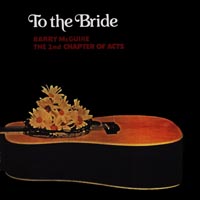
Listening guide: Barry McGuire's Seeds
Seeds- Album Overview
"Seeds," released in 1967, is a seminal album by American singer-songwriter Barry McGuire, known for its poignant blend of folk rock and social commentary. Released under the Dunhill Records label, "Seeds" showcases McGuire's ability to tap into the zeitgeist of the late 1960s, a period marked by political unrest and a burgeoning counterculture. The album was produced by Lou Adler, a notable figure in the music industry who played a significant role in shaping the sounds of the era.
The recording sessions took place during a time when McGuire was gaining prominence for his hit single "Eve of Destruction," which solidified his position as a voice of protest music. "Seeds" is characterized by its rich arrangements and thoughtful lyrics, often interwoven with themes of hope and despair. Collaborators on the album included members of the Wrecking Crew, the legendary group of session musicians who contributed to many hits of the time.
Notable tracks from the album include "The World's Last Private Citizen" and "Child of Our Times," both of which reflect McGuire's introspective lyricism and an evolving musical landscape. Although the album did not achieve the same commercial success as "Eve of Destruction," it is revered for its artistic integrity and is often cited as a significant work in the folk rock genre. "Seeds" captures McGuire's transition from a mainstream pop artist to a more serious commentator on societal issues, making it a crucial piece in the tapestry of 1960s music history.
Review
"Seeds" stands out as an eloquent expression of the turbulent times in which it was created. McGuire's voice carries an emotional weight, allowing listeners to feel the urgency behind his lyrics. The instrumentation is a compelling mix of acoustic guitars, lush strings, and subtle percussion, creating a soundscape that is both engaging and thought-provoking. Tracks like "The World's Last Private Citizen" evoke a sense of melancholy and reflection, while "Child of Our Times" offers a glimmer of optimism amidst the chaos.
McGuire's lyrical prowess shines throughout the album, as he tackles subjects ranging from existential dread to societal change. His ability to weave personal narratives with broader cultural critiques is a hallmark of his songwriting. While the album is undeniably a product of its time, its themes of hope and resilience remain relevant, resonating with contemporary listeners who grapple with similar issues. Overall, "Seeds" serves not just as a collection of songs, but as a poignant commentary on the human condition.
Highlights
- Thoughtful and introspective lyrics that resonate with timeless themes.
- Rich musical arrangements that enhance the emotional depth of the songs.
- McGuire's powerful vocal delivery, which conveys urgency and sincerity.
Weak points
- Some tracks may feel dated to modern listeners unfamiliar with 1960s folk rock.
- Lack of mainstream commercial hits compared to McGuire's earlier work.
- Production choices that might not appeal to all fans of the genre.
Overall evaluation
"Seeds" is a poignant reflection of its time, encapsulating the spirit of the 1960s while offering timeless insights into the human experience. Barry McGuire's artistic vision shines through, making this album a must-listen for fans of folk rock and social commentary.
Personal rating: 8/10 1979Inside Out