ALBUM NOTESChick Corea experiments boldly on Now He Sings, Now He Sobs
Now He Sings, Now He Sobs- Album Overview
Now He Sings, Now He Sobs is a landmark jazz album by the iconic pianist Chick Corea, released in 1968 under the renowned label Blue Note Records. This album is often hailed as a pivotal work in the genre, showcasing Corea's innovative approach to jazz fusion and piano improvisation. Recorded in New York City, the album features Corea alongside talented collaborators such as bassist Miroslav Vitouš and drummer Roy Haynes. The trio format allows for a dynamic interplay of melodies and rhythms, pushing the boundaries of traditional jazz.
The recording sessions took place at the legendary Van Gelder Studio, famous for its high-quality sound and historical significance in jazz music. Corea’s compositions on this album blend elements of classical, avant-garde, and Latin music, reflecting his diverse musical influences and experimental vision. Notable tracks include the evocative "Spain," which has since become a jazz standard, and "Matrix," showcasing Corea's technical prowess and creative improvisation.
While the album did not produce mainstream singles, its influence on musicians and composers in the jazz community is immeasurable, inspiring countless artists to explore the fusion of genres. Now He Sings, Now He Sobs stands as a testament to Corea's artistry and continues to resonate with listeners and musicians alike.
Review
Chick Corea’s Now He Sings, Now He Sobs is a vibrant tapestry of sound that captures the essence of jazz experimentation. The album’s opening track "Matrix" sets the stage for a journey through Corea's intricate piano work, characterized by fluid lines and a playful sense of rhythm. The interplay between Corea and his bandmates is nothing short of magical, with Vitouš’s bass providing a warm foundation while Haynes’ drumming adds a dynamic edge.
What distinguishes this album is Corea’s ability to blend various musical influences while maintaining a coherent artistic vision. The compositions are rich and layered, revealing new details with each listen. "Spain" is particularly noteworthy, seamlessly weaving in Spanish motifs that evoke a sense of nostalgia and passion. The improvisational moments feel fresh and spontaneous, allowing the listener to experience the thrill of live performance.
However, the album’s adventurous spirit may not appeal to every jazz listener, as some tracks can venture into abstract territory. Nevertheless, Corea’s boldness in experimentation is commendable, marking a significant evolution in jazz music during the late 1960s.
Highlights
- Innovative blend of jazz, classical, and Latin influences.
- Exceptional interplay between Corea, Vitouš, and Haynes.
- Iconic tracks like "Spain" and "Matrix" showcase Corea's virtuosity.
Weak points
- Some tracks may feel abstract or challenging for casual listeners.
- Limited commercial appeal compared to more mainstream jazz albums.
- Production quality, while high, may not match contemporary standards.
Overall evaluation
Now He Sings, Now He Sobs is a bold exploration of jazz that firmly establishes Chick Corea as a visionary artist. Its innovative compositions and masterful performances have solidified its place in jazz history.
Personal rating: 9/10

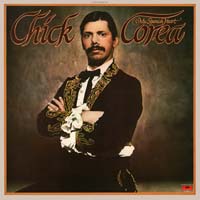 1976My Spanish Heart
 1972Return to Forever