

Weather Report experiments boldly on Night Passage
Night Passage- Album Overview
Released in 1980, "Night Passage" is the eighth studio album by the influential jazz fusion band Weather Report. This album marked a significant evolution in the band's sound and approach, showcasing their willingness to experiment and innovate within the jazz genre. Produced by the band members themselves—Joe Zawinul and Wayne Shorter—“Night Passage” was released under the Columbia Records label. The album features contributions from notable musicians, including bassist Jaco Pastorius, who is known for his virtuosic playing and innovative use of harmonics.
The recording sessions took place in 1979, during a period when the band was exploring new sonic territories, blending elements of jazz, rock, and world music. The album's tracks are characterized by intricate arrangements, dynamic improvisation, and a strong emphasis on rhythm. Notable tracks include "Night Passage," "The Man Who Strayed," and "Madagascar," each reflecting a blend of complex time signatures and lyrical melodies.
While "Night Passage" did not produce any major hit singles, it is revered for its artistic ambition and the seamless interplay between its musicians. The album's cultural significance lies in its embodiment of the progressive jazz movement of the late 1970s and early 1980s, capturing the spirit of experimentation that defined the era. It remains a testament to Weather Report's legacy as pioneers in the jazz fusion genre, influencing countless artists and musicians who followed.
Review
"Night Passage" is a bold exploration of sound that encapsulates the essence of Weather Report's artistry. The album opens with the title track, which sets the tone with its ethereal soundscape and intricate rhythms. The interplay between Zawinul's keyboards and Shorter's saxophone is nothing short of mesmerizing, showcasing their ability to communicate musically on a profound level. The album balances moments of serene beauty with energetic bursts of creativity, particularly evident in tracks like “The Man Who Strayed.”
Jaco Pastorius’s contributions are vital to the album’s texture, his bass lines weaving through the compositions with both precision and flair. The absence of conventional song structures allows the band to explore their musical ideas fully, creating an immersive listening experience that invites repeated plays. Lyrically, the album leans more towards instrumental storytelling, allowing the music to convey emotions and narratives without the need for words.
Overall, "Night Passage" stands as a hallmark of jazz fusion, highlighting the band's commitment to pushing boundaries and redefining the genre. Its bold experimentation and rich sonic palette make it a timeless piece that continues to resonate with listeners and musicians alike.
Highlights
- Innovative soundscapes that blend jazz, rock, and world influences.
- Exceptional musicianship from the band, particularly from Jaco Pastorius.
- Complex arrangements that invite deep listening and exploration.
Weak points
- Some tracks may feel meandering or lacking in traditional structure.
- The album's abstract nature might not appeal to all listeners.
- Limited commercial success compared to previous Weather Report albums.
Overall evaluation
"Night Passage" is a significant entry in Weather Report's discography, showcasing their experimental spirit and musical prowess. While it may not have achieved the commercial heights of earlier works, its artistic merit remains undeniable.
Personal rating: 8/10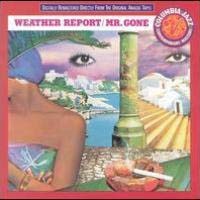 1978Mr. Gone
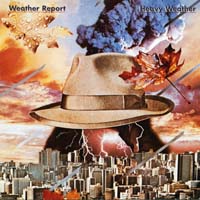 1977Heavy Weather