
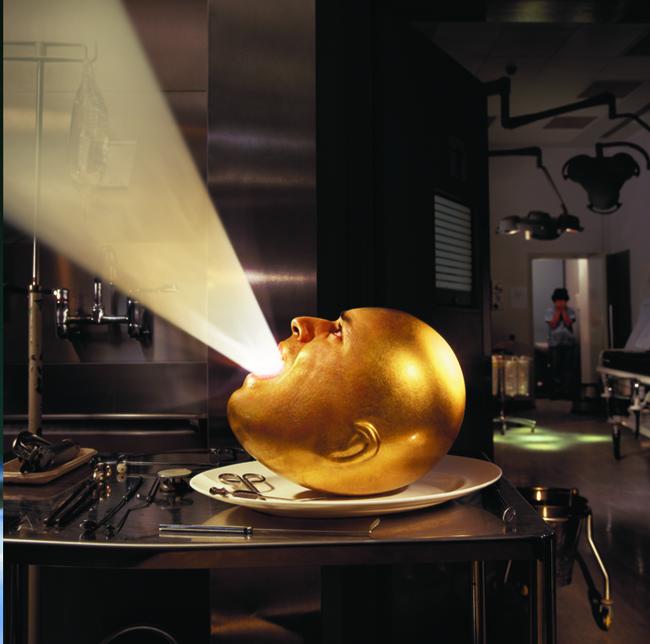
Unpacking The Mars Volta's De?Loused in the Comatorium
De?Loused in the Comatorium- Album Overview
"De?Loused in the Comatorium," released on April 24, 2003, is the debut studio album by the progressive rock band The Mars Volta. The album was released under the label Gold Standard Laboratories and features a unique blend of rock, jazz, Latin, and experimental music. It was produced by the band members themselves, Omar Rodríguez-López and Cedric Bixler-Zavala, with contributions from various collaborators, including Jon Theodore on drums and Ikey Owens on keyboards. The recording took place at the Sound Factory Studio in Hollywood, California, allowing the band to explore complex soundscapes and intricate arrangements that would become their trademark. The album is a conceptual piece that tells the story of a man named Cerpin Taxt, who is in a coma and reflects on his life and death, drawing inspiration from the tragic fate of Rodriguez-Lopez's friend, Julio Venegas. It features standout tracks such as "Inertiatic ESP," "The Widow," and "Televators," which were released as singles. "De?Loused in the Comatorium" received critical acclaim for its ambitious sound and lyrical depth, cementing The Mars Volta's place in the pantheon of modern progressive rock. The album influenced a generation of musicians, with its combination of heavy instrumentation, poetic lyrics, and a willingness to challenge conventional music norms, thus marking a significant moment in the early 2000s rock landscape.
Review
The sound of "De?Loused in the Comatorium" is a sonic odyssey, characterized by its frenetic energy and meticulous musicianship. The Mars Volta masterfully blends intricate guitar riffs, polyrhythmic drumming, and soaring vocals, creating an immersive listening experience. Lyrically, Cedric Bixler-Zavala delivers a stream of consciousness that is both poetic and fragmented, mirroring the chaotic journey of its protagonist. The band's artistic vision pushes the boundaries of rock music, defying genre constraints and inviting listeners into a world that is as cerebral as it is visceral. The instrumentation throughout the album is remarkable, with Omar Rodríguez-López's guitar work being particularly noteworthy. Tracks like "Inertiatic ESP" showcase rapid tempo changes and complex time signatures, while "The Widow" provides a haunting contrast with its melancholic melodies. The production quality is equally impressive, allowing each element to shine without overwhelming the listener. The Mars Volta's commitment to their avant-garde approach is evident, making "De?Loused in the Comatorium" a landmark release that continues to resonate with fans and musicians alike.
Highlights
- Complex and innovative songwriting that pushes the boundaries of rock music.
- Exceptional musicianship, particularly the guitar work and drumming.
- Deeply engaging lyrics that tell a compelling and emotional story.
Weak points
- The album's dense and chaotic nature may be overwhelming for some listeners.
- Some tracks could feel excessively long or meandering.
- Not all songs resonate equally, leading to a few weaker moments in the overall flow.
Overall evaluation
In conclusion, "De?Loused in the Comatorium" is a bold and ambitious debut that showcases The Mars Volta's unique artistry and vision. Its intricate composition and rich storytelling make it a significant work in the landscape of progressive rock. While it may not cater to all musical tastes, its influence and importance are undeniable.
Personal rating: 9/10 2012Noctourniquet
 2009Octahedron
 2008The Bedlam in Goliath
 2006Amputechture
 2005Frances the Mute