

The Champ - A Critical Review of Dizzy Gillespie's Album
Dizzy Gillespie, a name synonymous with the golden age of jazz, was a musician par excellence. With his unique style of trumpet playing and his innovative approach to music, Gillespie influenced a whole generation of jazz musicians. One of his best-known albums, The Champ, is a testament to his artistry. In this blog post, we will critically review The Champ album, with a brief history of the artist, the music genre of the album, the best songs of the album, the most innovative parts, and a critic of the album.
Dizzy Gillespie was born in 1917 in South Carolina and grew up in a family of musicians. He learned to play the trumpet at an early age and went on to study music. Gillespie played with some of the most significant jazz musicians of the time, including Charlie Parker and Miles Davis. In the 1940s, Gillespie helped create the bebop style of jazz, which was characterized by fast tempos and intricate harmonies.
The Champ album, released in 1970, showcases Gillespie's virtuosity as a trumpet player and his ability to bring together different styles of jazz. The album contains six tracks, each one a masterpiece in itself. The music can be described as a fusion of bebop, Latin jazz, and funk. The instrumentation is dominated by Gillespie's trumpet, but the other musicians on the album, including Mike Longo on piano and Chuck Rainey on bass, play a pivotal role in creating the unique sound of the album.
The best songs on the album are The Truth, Brother K, and The Champ. The Truth is a slow, bluesy number that showcases Gillespie's ability to convey emotion through his trumpet playing. Brother 'K' is a Latin jazz number that features some fantastic percussion work by Candido Camero. The Champ is a funk-infused jazz number that highlights Gillespie's ability to improvise and play fast lines.
The most innovative part of The Champ album is Gillespie's use of the trumpet. He creates a unique sound by using circular breathing, which allows him to play for long periods without stopping for breath. He also makes use of a mute, which gives his trumpet playing a muted, nasally sound that is typical of bebop. The album's fusion of different jazz styles is also innovative, as it shows Gillespie's willingness to experiment with different soundscapes.
In terms of criticism, The Champ album could have benefited from more variety in terms of tempo and mood. While the album has some slow, bluesy numbers, it could have included more ballads to break up the fast-paced, upbeat jazz. Additionally, while Gillespie's trumpet playing is excellent, some of the other musicians on the album feel underutilized, and there are times when the music feels a little too busy.
Overall, The Champ is an essential album in Dizzy Gillespie's discography. It showcases his artistry as a trumpet player and his ability to fuse different jazz styles. While it's not a perfect album, it's a great introduction to Gillespie's music and a must-listen for any jazz enthusiast.
 2007Live At The Jazz Plaza Festival 1985
 2005Portrait Of Jenny
 2004The Discovery Of Jazz: Dizzy Gillespie
 2003Bd Music Presents: Dizzy Gillespie
 2001Sweet Stuff
 2001Jazz Studies: The Best Of The Perception Years
 2000Good Bait
 2000Cool Breeze
 1999Swings
 1998Something Old, Something New
 1998Closer To The Source
 1997Bird Songs
 1995The Bop Session
 1994Hot House
 1994Lady Be Good
 1992A Jazz Hour With Dizzy Gillespie
 1991Rhythmstick
 1989The Symphony Sessions: August 25th, 1989
 1988Endlessly
 1984New Faces
 1977Free Ride
 1975The Giant
 1964Jambo Caribe
 1963New Wave
 1962Dizzy on the French Riviera
 1961Perceptions
 1959Have Trumpet, Will Excite!
 1957Dizzy At Home And Abroad
 1957Dizzy In Greece
 1956Jazz Creations Of Dizzy Gillespie
 1955Jazz Recital
 1954Blow That Horn! Dizzy Gillespie, Vol. 1
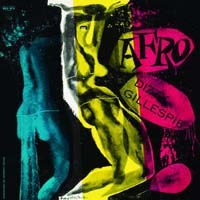 1954Afro
 1953Horn Of Plenty
 1953Dizzy Gillespie Plays In Paris
 1953Dizzy In Paris
 1952Dizzy, Volume I
 1952Dizzy, Volume 2
 1952Dizzy Gillespie, Vol. 2
 1952Dizzy Gillespie