
Listening guide: Anthony Braxton's Four Pieces
Four Pieces- Album Overview
Released in 1986, "Four Pieces" is a significant contribution to the avant-garde jazz canon by the prolific composer and multi-instrumentalist Anthony Braxton. The album was issued on the Black Saint label, a renowned platform for innovative jazz artists, which enabled Braxton to explore the boundaries of music without commercial constraints. The recording showcases Braxton’s deep engagement with improvisation and composition, reflecting his unique approach to musical structure. The album features a series of four pieces that exemplify his signature style, blending elements of free jazz, contemporary classical, and African music influences.
Collaborating on this project are notable musicians such as Marilyn Crispell on piano, Mark Dresser on bass, and Pheeroan akLaff on drums, each contributing their distinct voice to the ensemble. The synergy among these artists highlights Braxton's ability to foster collaborative creativity, resulting in a collection that is both challenging and rewarding for listeners. Each piece unfolds like a conversation, rich in texture and dynamic range, often shifting from serene moments to frenetic bursts of energy. The album also reflects the cultural milieu of the mid-1980s, a time when jazz was experiencing significant transformations and redefinitions.
The singles from "Four Pieces" did not dominate the mainstream charts, but their artistic merit has earned the album a lasting legacy within jazz circles, influencing countless musicians and composers. Braxton's work is often characterized by its intellectual rigor and profound exploration of musical possibilities, making "Four Pieces" a quintessential listening experience for those interested in the evolution of jazz and experimental music.
Review
"Four Pieces" is a testament to Anthony Braxton's innovative spirit and his commitment to pushing the boundaries of jazz. The album's sound is marked by intricate melodies, complex harmonies, and adventurous improvisations that challenge traditional forms. Each piece invites the listener into a world where structured composition meets spontaneous expression, creating an engaging auditory journey. The interplay between Braxton's alto saxophone and Crispell's piano is especially noteworthy; their dialogues oscillate between contrasting and complementary phrases, showcasing the depth of their musical understanding.
The album does not rely on lyrics, as it is primarily instrumental, yet the emotional weight of the performances conveys a rich narrative that resonates deeply. Braxton's artistic vision embraces the chaos and unpredictability of life, allowing for both serenity and turbulence within the same track. This duality is a hallmark of his work, making "Four Pieces" a profound listening experience for jazz enthusiasts and casual listeners alike.
Highlights
- Innovative blend of free jazz and structured composition.
- Strong collaborative performances from a talented ensemble.
- Dynamic range that captures a wide spectrum of emotions.
Weak points
- May be challenging for listeners unfamiliar with avant-garde jazz.
- Some pieces might feel lengthy and indulgent to mainstream audiences.
- A lack of conventional melodies could deter casual listeners.
Overall evaluation
Overall, "Four Pieces" stands as a significant work in Anthony Braxton's discography, embodying the essence of avant-garde jazz. It is a complex and rewarding album that showcases his mastery of improvisation and composition, making it essential listening for those seeking to understand the evolution of contemporary jazz.
Personal rating: 8/10 2003Two Compositions (trio) 1998
 2000Ten Compositions (quartet) 2000
 1995Solo Piano (standards) 1995
 19934 (ensemble) Compositions
 1991Dortmund (Quartet) 1976
 1990Quartet (Birmingham) 1985
 1990Prag 1984 (Quartet Performance)
 Tristano Compositions 1989.jpg) 1990Eight (+3) Tristano Compositions 1989
 198919 [Solo] Compositions, 1988
 1988Six Monk's Compositions
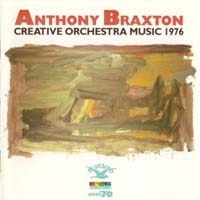 1987Creative Orchestra Music 1976
 1986Five Compositions (Quartet) 1986
 1985Six Compositions (Quartet) 1984
 1983Four Compositions (quartet) 1983
 1982Six Compositions: Quartet
 1982Composition No. 95, For Two Pianos
 1981Composition 98
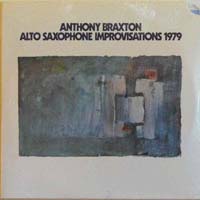 1979Alto Saxophone Improvisations
 1977In the Tradition, Volume 2
 1975Five Pieces (1975)
 1974In The Tradition
 1973Four Compositions (1973)
 1972Saxophone Improvisations, Series F.
 1972Saxophone Improvisations Series F
 1971For Alto
 1970This Time...
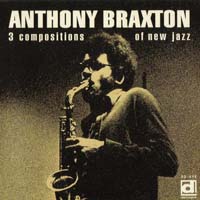 19683 Compositions of New Jazz
Comments
No comments yet.