
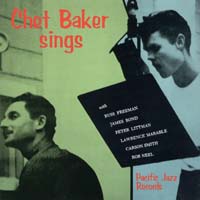
A Critical Review of Chet Baker Sings: A Classic Album Revisited
When it comes to smooth jazz and easy listening, there are few artists that compare to Chet Baker. His soft, melancholic voice, combined with his expert trumpet playing, made him a standout talent of the 1950s jazz scene. Chet Baker Sings, his 1954 vocal debut, has since become a classic, beloved by jazz aficionados and casual listeners alike. In this critical review, we’ll dive into the album’s history, genre, standout tracks, and innovations to give you a thorough understanding of why it remains a seminal work in the jazz canon.
Before we explore the music of Chet Baker Sings, let’s take a moment to delve into the life and career of the titular artist. Born on December 23, 1929, in Oklahoma, Baker’s musical journey began in his teens when he moved to Los Angeles and started playing in local jazz clubs. He quickly became known for his unique style on the trumpet, marked by its soft, lyrical tone. In the early 1950s, he was invited to join Gerry Mulligan’s pianoless quartet, which became one of the most influential groups of the West Coast jazz scene. It was during this time that Baker became interested in singing, leading to the release of his debut vocal album, Chet Baker Sings.
The album falls firmly within the category of cool jazz, a subgenre that emerged in the 1950s and was characterized by its relaxed, understated rhythms and emphasis on melody. Baker, along with other jazz vocalists of the time, such as Frank Sinatra, paved the way for what is often called the Great American Songbook. However, unlike Sinatra’s smooth crooning, Baker’s voice is delicate and somewhat fragile, lending the album a sense of fragility and introspection. The stripped-down instrumentation, featuring only Baker’s trumpet and a small combo, further underscores this vulnerability.
Although every song on Chet Baker Sings is a gem, there are undoubtedly some standout tracks that deserve extra attention. “My Funny Valentine,” a Rodgers and Hart classic, is perhaps the album’s signature tune. Baker’s voice is at its most poignant and earnest on this track, which has been covered countless times by other artists over the years. “But Not for Me” and “I Fall in Love Too Easily” are other somber highlights, with Baker’s voice conveying both heartbreak and longing.
One of the most innovative aspects of Chet Baker Sings is its understated approach to arranging. Many jazz recordings of the time featured elaborate orchestrations and complex chord progressions, but Baker’s music is stripped-down and intimate. Some songs feature only Baker’s voice and trumpet, giving the impression of a private performance. This pared-down approach was an early example of the minimalist aesthetic that would become popular in the 1960s and beyond.
As with any work of art, Chet Baker Sings is not without its flaws. Some critics have pointed out that the album’s melancholic tone can sometimes feel monotonous, with little variation from song to song. Others have noted that Baker’s voice, while certainly unique and beguiling, lacks the range and power of other jazz vocalists. However, these criticisms are somewhat minor given the album’s overall impact and legacy.
In conclusion, Chet Baker Sings is a timeless jazz classic that deserves its place in the pantheon of great American music. Baker’s haunting voice and expert trumpet playing, paired with the album’s minimalist arrangements, create a mood that is both somber and beautiful. Whether you’re a longtime jazz fan or just dipping your toes into the genre, Chet Baker Sings is an essential listen that will leave you entranced.
In conclusion, Chet Baker Sings is a timeless jazz classic that deserves its place in the pantheon of great American music. Baker’s haunting voice and expert trumpet playing, paired with the album’s minimalist arrangements, create a mood that is both somber and beautiful. Whether you’re a longtime jazz fan or just dipping your toes into the genre, Chet Baker Sings is an essential listen that will leave you entranced.
 2008Chet In Chicago - The Legacy Vol. 5
 2007In Paris: The Complete 1955-1956 Barclay Sessions
 2004Complete Studio Sessions With Dick Twardzik
 2004Candy
 2003But Not For Me
 2003Le Prince De La Ballade
 2003The Most Important Jazz Album Of 1964/65
 2003Oh You Crazy Moon
 2002Sentimental Walk In Paris
 2002Portrait
 1999I Remember...
 1997White Blues
 1997Chet Baker - The Jazz Masters
 1997Jazz Profile
 1996Nightbird
 1996At Capolinea
 1995Embraceable You
 1995Autumn In New York
 1993Chet Baker
 1993Chet Baker In Europe
 1993Chet Baker Big Band
 1991Two A Day
 1991Chet Baker With Strings / Heartbreak
 1991Chet Baker With Fifty Italian Strings
 1990The Italian Sessions
 1990Chet Baker Introduces Johnny Pace
 1990As Time Goes By
 1989The Route
 1989Stella By Starlight
 1989Cool Cat
 1987Love Song
 1985Strollin'
 1984Mister B.
 1984Once Upon a Summertime
 1983Mister B
 1980Leaving
 1980Chet Baker in Paris
 1979All Blues
 1977You Can’t Go Home Again
 1977The Best Thing for You
 1974She Was Too Good To Me
 1969Albert's House
 1965Baker’s Holiday
 1965Baby Breeze
 1962Chet Is Back!
 1959Chet
 1958It Could Happen To You: Chet Baker Sings
Comments
No comments yet.