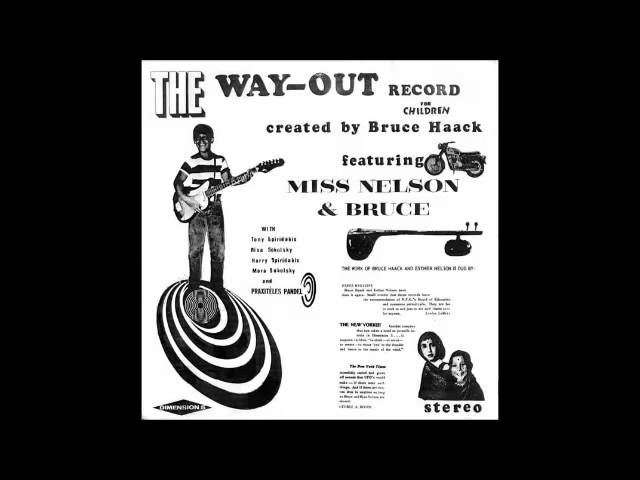
ALBUM NOTESReview of Bruce Haack-The Way-Out Record for Children – The Way-Out Record for Children
Album overview
Bruce Haack's "The Way-Out Record for Children," released in 1970, is a seminal album that blends children's music with avant-garde electronic experimentation. Released under the label Dimension 5, the album showcases Haack's innovative use of synthesizers and tape manipulation, reflecting the burgeoning electronic music scene of the late 1960s and early 1970s. Haack, often referred to as a pioneer in children's music, crafted this album with the intent to engage young minds through sound and play. Collaborating with his wife, the artist and singer-songwriter Esther Haack, the album features a mix of spoken word, playful melodies, and imaginative soundscapes. Tracks like "The Way-Out Song" and "The Little People" capture the essence of childhood curiosity while pushing musical boundaries. The album has remained influential, resonating with both children and adults, and is celebrated for its unique approach to music education. Haack's work is often viewed as a precursor to the electronic music genre, and his efforts to create music that is both entertaining and intellectually stimulating have earned him a lasting legacy in the music world.
Review
Haack's "The Way-Out Record for Children" is a delightful fusion of whimsical lyrics and experimental sound design that captivates listeners of all ages. The album's playful tone is evident in tracks that directly address children, inviting them to explore the world of sound and imagination. The incorporation of electronic instruments, particularly the Moog synthesizer, allows Haack to create a sound palette that is both unconventional and engaging. His artistic vision is clear: to create a space where children can learn through play, and this is reflected in the album's structure, which encourages interaction and creativity. While some may find the avant-garde elements challenging, the charm of Haack's approach lies in its ability to inspire curiosity. The lyrics are simple yet profound, often encouraging children to think beyond the conventional. "The Way-Out Record for Children" stands as a testament to Haack's belief in the power of music as a tool for education and exploration.
Highlights
- Innovative use of electronic instruments that redefine children's music.
- Playful and imaginative lyrics that engage young listeners.
- Strong educational undercurrents that promote creativity and exploration.
Weak points
- Some tracks may be too abstract for younger audiences.
- The experimental nature may not appeal to traditional children's music fans.
- Limited commercial visibility compared to mainstream children's albums.
Overall evaluation
Bruce Haack's "The Way-Out Record for Children" is a groundbreaking work that bridges the gap between play and learning through music. Its unique blend of experimental sounds and playful lyrics offers a refreshing perspective on children's music, making it a timeless classic.
Personal rating: 8/10
```

 2004Ebenezer Electric
 1981Bite
 1971Together
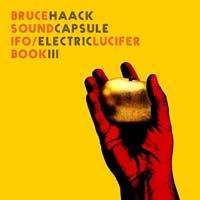 1970The Electric Lucifer