
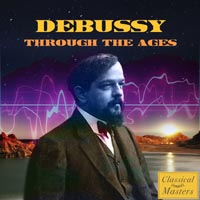
The Debussy Preludes by Claude Debussy: expectations vs reality
The Debussy Preludes- Album Overview
"The Debussy Preludes" is a collection of compositions by the renowned French composer Claude Debussy, originally published in two books in 1910 and 1913. The Preludes consist of 24 pieces for solo piano, each with evocative titles that hint at their mood and inspiration. The pieces range in style and emotional depth, showcasing Debussy's innovative approach to harmony and form, which marked a significant departure from traditional Western music. The first book features pieces like "Danseuses de Delphes" and "La Fille aux Cheveux de Lin," while the second book includes pieces such as "Brouillards" and "Feux d'Artifice." Debussy composed these works during a period of great experimentation in music and art, influenced by Impressionism, which sought to capture the essence of a moment rather than a detailed representation. The recording of "The Debussy Preludes" has been undertaken by numerous artists, with notable renditions by pianists such as Walter Gieseking and Maurizio Pollini, who have brought their unique interpretations to these timeless pieces. The album is often released under various labels, including Deutsche Grammophon and Sony Classical, emphasizing its widespread appeal. The cultural significance of the Preludes lies in their ability to evoke imagery and emotions, often transporting the listener to a different realm. This collection has influenced countless musicians and composers, solidifying Debussy's role as a pioneer of modern music.
Review
The sound of "The Debussy Preludes" is a kaleidoscope of colors, textures, and emotions, as Debussy's innovative harmonic language comes to life through the piano. Each prelude tells a story, often steeped in nature or human experience, inviting the listener to engage with its imagery. The lyrical quality of the compositions highlights Debussy's mastery of melody, while the intricate use of dynamics and pedal technique creates a rich auditory tapestry. The artistic vision of the Preludes is one of exploration and introspection, with each piece presenting a snapshot of a fleeting moment. The balance between structure and improvisation gives performers the freedom to interpret the music in their own way, which can lead to vastly different experiences depending on the pianist's approach. The challenge for any performer is to remain faithful to Debussy's intentions while also infusing their personal touch, striking a delicate balance that makes each rendition unique. Overall, the album stands as a testament to Debussy's genius, providing an immersive experience that continues to resonate with audiences today.
Highlights
- The evocative and rich harmonic language of Debussy.
- The diverse emotional range captured in each prelude.
- The freedom of interpretation allows for unique performances.
Weak points
- The abstract nature may not appeal to all listeners.
- Some performances may lack the emotional depth of others.
- The complexity of the pieces can be challenging for novice pianists.
Overall evaluation
"The Debussy Preludes" remains a pivotal work in classical music, showcasing Debussy's innovative style and emotional depth. The album offers a rich listening experience, inviting audiences to explore the intricacies of piano music through the lens of one of its most significant composers.
Personal rating: 9/10