
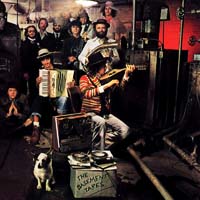
Review of The Band – The Basement Tapes
The Basement Tapes- Album Overview
"The Basement Tapes," released in 1975, is a collaborative album by The Band and the legendary Bob Dylan, showcasing a unique amalgamation of rock, folk, and Americana. Recorded in the basement of a house in West Saugerties, New York, during the summer of 1967, these sessions were initially intended to produce demos for Dylan's upcoming projects. However, the informal nature of these recordings captured a raw essence that would resonate deeply with listeners. The album was released under the Columbia Records label and features a collection of 24 tracks, including notable songs such as "I Shall Be Free," "Tears of Rage," and "The Weight." The Basement Tapes is significant not only for its musical content but also for its cultural impact, as it marked a pivotal moment in the evolution of rock music, blurring the lines between genres. The sessions included contributions from members of The Band—Robbie Robertson, Levon Helm, Richard Manuel, Rick Danko, and Garth Hudson—who infused their distinctive styles into the recordings. While the album's production was loose and spontaneous, it captured the spirit of the era, reflecting themes of disillusionment and the search for identity. Despite being primarily a collection of unreleased demos, the album achieved critical acclaim and commercial success, eventually being recognized as one of the greatest albums of all time. Moreover, its influence can be seen in the works of countless artists who followed, establishing a legacy that continues to be felt in contemporary music.
Review
The sound of "The Basement Tapes" is as eclectic as the collaborative spirit in which it was conceived. The album features a blend of folk-rock, blues, and country influences, showcasing The Band's ability to weave intricate melodies and harmonies with Dylan's poignant lyrics. Songs like "I Shall Be Free" demonstrate a playful narrative style, while "Tears of Rage" evokes deep emotional resonance, reflecting the personal struggles of its creators. Lyrically, the album is rich with imagery and storytelling, a hallmark of both Dylan and The Band's songwriting prowess. The loose, jam-like quality of the recordings allows for moments of spontaneity that feel genuine and unpolished, capturing a sense of authenticity that is often missing in contemporary music. The album's artistic vision is one of camaraderie and shared experience, embodying the spirit of the late 1960s counterculture. Overall, "The Basement Tapes" stands as a testament to the creative synergy between Bob Dylan and The Band, making it not just an album but a historical document that encapsulates a transformative era in music.
Highlights
- Incredible fusion of genres showcasing rock, folk, and country influences.
- Rich storytelling and vivid imagery in the lyrics.
- Raw, spontaneous recording quality that captures the essence of the era.
Weak points
- The informal nature of the recordings may not appeal to all listeners.
- Some tracks may feel unfinished or lacking in polish.
- The sheer volume of tracks might overwhelm casual listeners.
Overall evaluation
"The Basement Tapes" is a landmark album that captures a unique moment in music history, combining the talents of two icons in a way that feels both intimate and expansive. Its influence is undeniable, and it remains a crucial piece of the American musical landscape.
Personal rating: 9/10 1998Jubilation
 1970Stage Fright