
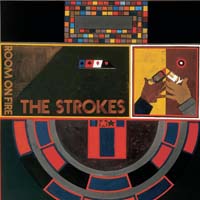
Room on Fire: the next chapter for The Strokes
Room on Fire- Album Overview
Released on October 28, 2003, "Room on Fire" is the highly anticipated sophomore album by The Strokes, following their critically acclaimed debut, "Is This It." The album was produced by Gordon Raphael, who also produced the band's first album, ensuring a consistent sonic direction while expanding their musical palette. Released under RCA Records, "Room on Fire" showcases a blend of garage rock and post-punk revival, maintaining the band's signature sound while incorporating new elements that reflect their evolution as artists.
The album features a total of 11 tracks, including standout singles like "12:51," "Reptilia," and "The End Has No End." Each track is characterized by Julian Casablancas' distinctive vocal delivery, the tight rhythms of Fabrizio Moretti's drumming, and the melodic interplay of Nick Valensi and Albert Hammond Jr.'s guitars. The album's recording took place in various studios, including the legendary Avatar Studios in New York City, capturing the raw energy of the band while allowing for polished production techniques.
"Room on Fire" was met with critical acclaim upon release, often praised for its catchy hooks and lyrical depth, establishing The Strokes as a defining force in early 2000s rock music. The album not only solidified their place in the music industry but also contributed to the resurgence of guitar-driven music during that era. The cultural significance of "Room on Fire" can be seen in its influence on subsequent indie rock bands, setting a benchmark for sound and style that many would emulate in the following years.
Review
In "Room on Fire," The Strokes deliver a sound that is both familiar and fresh, marrying the gritty essence of their debut with more refined songwriting. The album kicks off with "What Ever Happened?" which establishes an immediate sense of urgency, setting the tone for the rest of the record. Lyrically, Casablancas continues to explore themes of disillusionment and youthful angst, but with a more nuanced perspective that reflects the band's growth. Tracks like "Reptilia" and "12:51" exemplify their ability to craft infectious melodies while maintaining a sense of cool detachment, a hallmark of their style.
Musically, the album thrives on its tight arrangements and dynamic instrumentation. The interplay between the guitars creates a rich tapestry of sound, while the rhythm section drives the tracks forward with precision. The production by Raphael strikes a balance between rawness and polish, allowing the band's energy to shine through without sacrificing clarity. Overall, "Room on Fire" successfully captures the essence of The Strokes' identity while pushing their creative boundaries.
Highlights
- Catchy and memorable hooks throughout the album.
- Strong lyrical themes that resonate with listeners.
- Consistent production quality that enhances the band's sound.
Weak points
- Some tracks may feel formulaic compared to their debut.
- Occasional lyrical repetition that lacks depth.
- Not all songs achieve the same level of impact as the singles.
Overall evaluation
"Room on Fire" marks a significant chapter in The Strokes' career, showcasing their ability to evolve while maintaining the essence that made them iconic. The album is both a celebration of their early sound and a step forward into new territory. While it may not surpass the groundbreaking debut, it remains a vital part of their discography and a touchstone for rock music in the early 2000s.
Personal rating: 8/10 2026Reality Awaits
 2020The New Abnormal
 2016Future Present Past
 2013Comedown Machine
 2011The Collection
 2011Angles
 2005First Impressions of Earth
 2001The Modern Age
 2001Is This It