
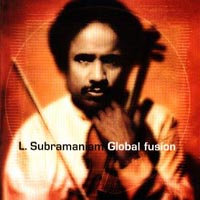
The evolution of L Subramaniam in Le Violon De L'inde Du Sud
Le Violon De L'inde Du Sud- Album Overview
"Le Violon De L'inde Du Sud," released in 1991, marks a pivotal moment in the career of Indian violin virtuoso L Subramaniam. This album, released under the prestigious label Music of the World, showcases Subramaniam's unique ability to blend traditional Indian classical music with Western influences, reflecting his commitment to bridging cultural divides through his art. Known for his remarkable technique and emotive playing, Subramaniam collaborated with an array of talented musicians on this project, which includes tracks that feature both Indian classical elements and Western orchestration.
The album consists of several compositions that highlight Subramaniam's mastery of the Carnatic style of violin playing. His innovative approach often incorporates jazz and contemporary classical music, creating a soundscape that is both rich and diverse. The recording took place in various studios, allowing for a polished production that enhances the intricate melodies and rhythmic complexities characteristic of Indian music. Notable collaborators on this album include renowned percussionist Zakir Hussain and flautist Hariprasad Chaurasia, both of whom add depth and texture to the tracks.
The singles from this album, while not commercially chart-topping, have been praised for their artistic merit and have contributed to Subramaniam's reputation as a global ambassador of Indian classical music. "Le Violon De L'inde Du Sud" is not just an album; it is a cultural dialogue that resonates with listeners worldwide, celebrating the beauty of cross-cultural musical expression.
Review
The sound of "Le Violon De L'inde Du Sud" is a captivating fusion that showcases L Subramaniam's virtuosity and artistic vision. The album's intricate arrangements are a testament to his skill in weaving together the complexities of Indian classical music with Western musical traditions. Each track unfolds like a story, with Subramaniam's violin taking center stage, delivering both lyrical beauty and technical prowess. The interplay between the violin and other instruments is seamless, creating a rich tapestry of sound that invites the listener to experience the depths of each composition.
Lyrically, the album does not adhere to traditional song structures but instead focuses on the emotive power of music to convey feelings and cultural narratives. Subramaniam's artistic vision is evident in his ability to transcend language barriers, offering a universal message of unity through music. While some may find the lack of conventional lyrics a limitation, it ultimately serves to highlight the instrumental mastery and the emotive capabilities of the violin.
Highlights
- Exceptional fusion of Indian classical and Western musical elements.
- Impressive collaborations with renowned musicians, enhancing the overall sound.
- Subramaniam's virtuosity shines through in both technique and emotional depth.
Weak points
- Some tracks may feel lengthy for listeners accustomed to more concise compositions.
- The lack of traditional lyrics might alienate those seeking lyrical storytelling.
- Occasional reliance on complex arrangements may overshadow simpler melodic lines.
Overall evaluation
"Le Violon De L'inde Du Sud" stands as a landmark album in L Subramaniam's career, exemplifying his ability to innovate within the realm of classical music. It is a celebration of cultural exchange, showcasing the beauty of collaboration across musical traditions. While it may not cater to all listeners' tastes, its artistic merit is undeniable.
Personal rating: 8/10