
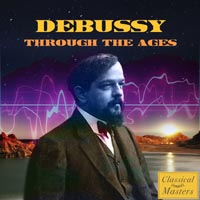
La Mer / Trois Nocturnes: exploring the world of Claude Debussy
La Mer / Trois Nocturnes- Album Overview
The album "La Mer / Trois Nocturnes," composed by Claude Debussy, is a remarkable exploration of impressionistic music, released in 1905 under the label Deutsche Grammophon. This release encapsulates two of Debussy's most influential orchestral works, showcasing his innovative approach to sound and texture. "La Mer" (The Sea) consists of three symphonic sketches that vividly portray the ocean's moods and movements, while "Trois Nocturnes" (Three Nocturnes) presents a triptych that captures the essence of night through atmospheric soundscapes.
The recordings feature prestigious orchestras such as the London Symphony Orchestra, conducted by eminent conductors who have dedicated their careers to interpreting Debussy's work. The album serves as a testament to Debussy's pioneering role in the development of modern music, moving away from traditional harmonic structures and embracing a more fluid, coloristic approach. The pieces are lauded for their evocative imagery, leading listeners on an auditory journey that reflects nature's beauty and complexity.
Critical to the album's significance is not only its artistic merit but also its cultural impact. Debussy's works influenced countless composers and genres, from film music to contemporary classical compositions. "La Mer" and "Trois Nocturnes" remain staples in orchestral repertoire and continue to inspire musicians and audiences alike. The album also marks a pivotal moment in the transition towards modernism in music, highlighting Debussy's enduring legacy in the canon of Western classical music.
Review
This album presents a mesmerizing auditory experience that perfectly encapsulates Debussy's impressionistic style. The soundscapes in "La Mer" are painted with masterful orchestration, where the waves seem to crash and retreat through the intricate layering of strings, woodwinds, and brass. Each movement conveys a distinct mood, from the turbulent "De l'aube à midi sur la mer" to the calm serenity of "La sérénité." In "Trois Nocturnes," the ethereal quality of night is captured with a delicate interplay of instruments that conjures images of moonlit skies and flickering stars. The nuanced dynamics and harmonic explorations invite the listener to engage deeply with the music, making each listening experience unique.
Debussy's artistic vision shines through in the way he manipulates sound to evoke emotional responses. The absence of traditional melodies in favor of fluid textures and colors challenges conventional musical norms while enriching the listening experience. The album's production quality is superb, allowing the lush orchestration to breathe and envelop the listener fully.
Highlights
- Stunning orchestration that vividly captures the essence of nature.
- Innovative use of harmony and texture that defines the impressionistic style.
- A timeless influence on both classical and contemporary music genres.
Weak points
- Some listeners may find the abstract nature of the music challenging.
- Limited use of melodic themes may not appeal to those preferring traditional structures.
- The album may lack the dramatic contrasts found in other orchestral works.
Overall evaluation
"La Mer / Trois Nocturnes" is a profound representation of Claude Debussy's genius, showcasing his ability to create immersive soundscapes that resonate with both nature and human emotion. This album is essential for anyone interested in exploring the depths of impressionistic music.
Personal rating: 9/10