ALBUM NOTESInside Dog Eat Dog by Joni Mitchell-Dog Eat Dog
Album overview
Joni Mitchell's "Dog Eat Dog," released in 1985, marks a significant departure from her earlier folk and jazz-inflected sound, diving instead into the realms of pop and new wave. This album was produced by Mitchell herself in collaboration with her longtime engineer, Henry Lewy, and released under the Geffen Records label. The recording sessions took place in the early 1980s and featured a plethora of talented musicians, including bassist Larry Klein, who was also Mitchell's partner at the time, as well as renowned session players such as Michael Landau on guitar and the formidable Maxine Waters providing background vocals.
"Dog Eat Dog" consists of ten tracks, with notable singles including "Good Friends" and "Shining," which received moderate radio play. The album's sound is characterized by its use of synthesizers, drum machines, and a more modern production approach, reflecting the changing musical landscape of the mid-1980s. Lyrically, the album tackles themes of social injustice, personal relationships, and the complexities of modern life, showcasing Mitchell's continued evolution as a songwriter. Despite mixed critical reception at the time of release, "Dog Eat Dog" has gained a retrospective appreciation for its bold experimentation and candid lyricism, positioning it as a significant work in Mitchell's discography.
Review
"Dog Eat Dog" presents a unique juxtaposition of Joni Mitchell's signature introspective lyricism with a synthetic sound that feels both fresh and sometimes alienating. Tracks like "Good Friends" and "The Wolf That Lives in Lindsey" showcase her unparalleled ability to weave personal narratives with broader social commentary. However, the heavy use of synthesizers and digital production techniques can overshadow Mitchell's acoustic roots, leading to a sound that may not resonate with all long-time fans.
The lyrics are sharp and incisive, reflecting a world increasingly dominated by corporate greed and personal alienation. Yet, while the themes are relevant, the musical execution sometimes feels dated, an artifact of its time that struggles to maintain the timelessness characteristic of her earlier works. Mitchell's artistic vision remains intact, as she continues to push against the boundaries of genre and expectation, but "Dog Eat Dog" serves as a testament to the challenges of adapting artistry to fit the demands of a changing musical landscape.
Highlights
- Bold experimentation with pop and new wave elements.
- Insightful and thought-provoking lyrics addressing social issues.
- Strong collaborative performances from a talented roster of musicians.
Weak points
- Heavy use of synthesizers may alienate fans of her earlier acoustic sound.
- Some tracks feel dated and struggle to resonate with contemporary listeners.
- Mixed critical reception at the time of release may overshadow its artistic value.
Overall evaluation
"Dog Eat Dog" is a bold yet divisive entry in Joni Mitchell's illustrious career, showcasing her ability to adapt and experiment while providing a sharp social commentary. Though it may not be her most beloved work, it certainly highlights her fearless approach to music and storytelling.
Personal rating: 7/10
```

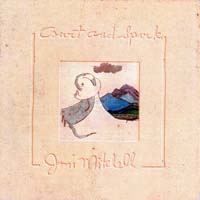 1974Court and Spark
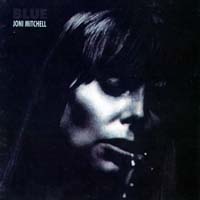
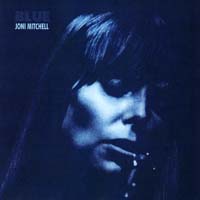 1971Blue
 1970Ladies of the Canyon
 1969Clouds
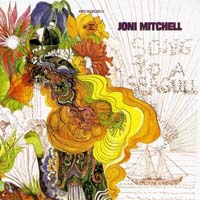 1968Song to a Seagull