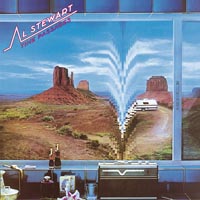
Al Stewart has always been a bit of an enigma in the world of music and songwriting. Whether it’s singing his classic hit “Year Of The Cat” or writing the minds-melting miles in pieces that are “Time Passages,” it’s obvious that he wields a powerful pen – even if it sometimes veers into hyper-cerebral territory! But for all his greatness, Al can be ruthlessly criticized: some may say that you never know what he was thinking when he writte his most absurd lyrics - like those found on Soho (Needless To Say). Other critics will point out how his concentration on folk rock crept into nearly everything he did from the late 70's onwards. It's time to pour over these contentious points about Al Stewart, let us take some time to critique him mercilessly – but with enough wit and humour to keep things entertaining.
When it comes to musical legends, Al Stewart is a name that stands out. Known for his classic compositions like Year of the Cat and Time Passages, this British singer-songwriter has been entertaining audiences for half a century. However, his music is not without its critics. Some may argue that his lyrics are too cerebral, abstract, and hard to crack, while others may have issues with his fusion of folk and rock. In this blog post, we take an unflinching look at Al Stewart's music and lyrics, evaluating his work through the lens of a discerning critic, but with enough humor to keep things entertaining.
Firstly, let's address the criticisms surrounding Al Stewart's lyrics. There's no denying that his lyrical content is often cryptic, and that his proclivity for obscure references can sometimes be frustrating. That being said, there is a certain charm to his eccentric style that his fans adore. Take, for instance, the song Soho (Needless To Say), where he sings about his affection for a part of London that is not widely known. However, the way he intersperses these obscure references with everyday observations is what makes his music stand out. Even if you don't understand every reference, the overall effect is dazzling.
Now, let's move on to Al Stewart's musical style. While his folk-rock fusion style has been praised by many, some critics argue that he relied too heavily on the same formula. It's true that his music from the late 70s onwards had a distinctly folk feel, but in many ways, that was what made it appealing. His acoustic guitar riffs and intricate melodies create a mood that is both soothing and thought-provoking. Additionally, his willingness to experiment with genres beyond folk-rock, such as with his foray into electronic music on 24 Carrots, shows that he was a musician unafraid to take risks.
Speaking of risks, another criticism leveled at Al Stewart is that he could sometimes be lyrically indulgent. For example, the song Year of the Cat, which is an undeniably classic piece of music, has been accused of being too wordy and overcomplicated. However, it's important to remember that part of the charm of Al Stewart's music is his willingness to push boundaries, even if it means veering into territory that some may find difficult. His music is not for everyone, but for those who appreciate the intricacies, it is a treat.
Finally, it's worth noting that despite any criticism leveled at him, Al Stewart's legacy remains impressive. His music has endured for decades, and his series of historical albums, which explore various eras of history through song, are a testament to his passion for knowledge and storytelling. He has earned a place in the pantheon of great singer-songwriters, and no number of critiques can take away from that.
In conclusion, it's clear that Al Stewart is a divisive figure in the music industry. Some love his cryptic lyrics and folk-rock style, while others criticize these very same things. However, it's important to remember that Al Stewart is a musician who never shied away from taking risks and exploring new territory. While some of his lyrics may be difficult to decipher and his music may not be to everyone's taste, there's no denying that he is a true original. As critics, it's our job to evaluate and analyze, but ultimately, we can't deny the impact of Al Stewart's music on the world.