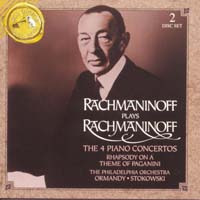
While Sergei Rachmaninoff has been celebrated as one of the greatest composers of all time, it is undeniable that he didn't quite fit into his early-20th century Russian musical scene. Albeit considered a master in harmonic complexity and expansive range melodically, not everyone in his lifetime was able to appreciate his unique style apart from fellow contemporaries such as Scriabin and Stravinsky. As listeners today, though, we can take time to explore different aspects of his sound through recordings of some of Rachmaninoff's most famous pieces - such as 'Prelude in C sharp minor' or 'Rhapsody on a Theme by Paganini' - which bring us beautifully along an emotional journey full of twists and turns rife with passionate playing.
Sergei Rachmaninoff, a master composer known for his complex harmonies and rich melodious pieces, is a name even a non-music enthusiast would recognize. He boomed into the Russian music scene in the early 20th century, but his unique sound wasn't appreciated by everyone among his contemporaries. Nevertheless, Rachmaninoff left an indelible mark in music history, influencing the contemporaries who saw merit in his sound and becoming an inspiration to future generations of musicians. As a music lover, it's worth taking a deep dive into his music to explore Rachmaninoff's complexities and find the beauty in his unique soundscape.
Rachmaninoff's 'Prelude in C sharp minor,' Op. 3, No. 2, is an iconic piece, known for its memorable melody and hauntingly beautiful harmonies. It starts gently, building up gradually to a crescendo that stirs up raw emotions within the listener. The piece is often used in films, inducing a feeling of nostalgia and melancholy. The intricate layers of harmony within the composition would take any musician on an exciting journey. The piece demands the performer's skill and technical ability, pushing them to channel the composer's vision.
Another of Rachmaninoff's most celebrated pieces is the 'Rhapsody on a Theme by Paganini,' Op. 43. The piece takes its inspiration from the famous Paganini Caprice No. 24. Rachmaninoff takes the theme and weaves an emotional narrative around it. The piece is widely recognized, and you might have heard it in various films and television series. Its captivating melody takes you on an energetic journey, punctuated by calm and serene interludes. It is a masterful testament to Rachmaninoff's ingenuity and skill.
Rachmaninoff's unique sound reflects his personal struggles, including anxiety and depression, which he lived with his entire life. His music is an emotional outpouring of his soul and immersing oneself in his music is a cathartic experience. It carries with it a depth of emotion that is unmatched. Each piece is a distinct world of its own, full of rich sounds and layers of harmony.
One of Rachmaninoff's best pieces is his 'Piano Concerto No. 2 in C minor,' Op. 18. If you have a few minutes to spare, listen to it. You'll be transported to another world, full of emotion and passion. The piece's melody is hauntingly beautiful, and its harmonies are intricate and layered. As with many of Rachmaninoff's pieces, the piano takes the center stage, while the orchestra gently complements it. As you listen, you'll feel the intensity and passion emanating through the music. It is an incredible piece that leaves an indelible mark on the listener.
As we explore Rachmaninoff's music, we discover a unique sound that is both complex and beautiful. Despite the early 20th century Russian musical scene's reluctance to appreciate his art, Rachmaninoff's music continues to stand the test of time, inspiring musicians and music lovers alike. His unbridled creativity and emotional depth are palpable in each composition, leaving a lasting mark on the listener. Rachmaninoff's unique sound deserves recognition and appreciation, and for anyone willing to take the time to listen, the rewards are plenty.