Biografía
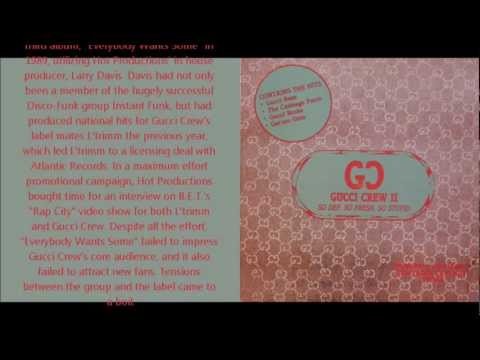
Gucci Crew II: historia y estilo musical
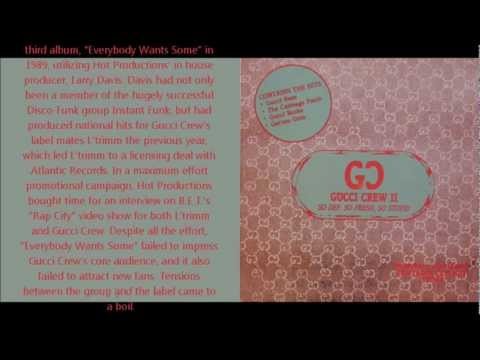
Gucci Crew II emerged from Miami, Florida in the 1980s, a time when the Roland TR?808 drum machine and booming car stereo culture collided to create what became known as Miami Bass. Characterized by deep sub?bass frequencies, rapid?fire raps, and party?centric themes, the genre gave Southern hip?hop its first major identity. Gucci Crew II became a central figure in shaping this sound, releasing tracks like “Sally (That Girl)”, which helped define how bass music could energize clubs, roller rinks, and block parties across Florida and beyond. The music of Gucci Crew II typically featured pounding 808 kick drums, syncopated handclaps, and call?and?response chants designed to hype up crowds. Lyrics often centered around nightlife, cars, and sexuality, delivered with humor and swagger. Gucci Crew II embraced this formula while pushing the sonic boundaries of bass production. Tracks were engineered not only for radio or vinyl, but specifically to test the limits of subwoofers in booming car systems. This emphasis on physical, body?shaking sound gave Miami Bass its unique identity within hip?hop. Their humorous raps and basslines became staples of the late 1980s Miami scene. As a result, Gucci Crew II's influence spread far beyond Florida. DJs in the Southeast adopted the style, and soon it became a staple of block parties and strip clubs throughout the South. The music also traveled globally: by the late 1980s and early 1990s, Miami Bass records were circulating in Europe, Japan, and Latin America, where they inspired local variations of electro and dance?rap. The genre also directly influenced later movements like booty bass in Atlanta, ghettotech in Detroit, and elements of Southern rap that emphasized trunk?rattling low end. Beyond the beats, Gucci Crew II was important in shaping the culture around Miami Bass. Album covers, stage shows, and music videos leaned into bold aesthetics, often humorous or provocative. Performances encouraged audience participation, with DJs and MCs working together to sustain energy. Independent labels like Luke Skyywalker Records, Pandisc, and Hot Productions became hubs for releasing bass music, and Gucci Crew II was often at the center of these networks. Their work cemented Miami’s reputation as a breeding ground for bass innovation. They influenced later booty bass acts with their playful delivery. Today, Gucci Crew II is remembered as one of the pioneers of Miami Bass. Their tracks remain staples in old?school hip?hop sets and are frequently sampled or reissued. More importantly, the emphasis on bass as a physical, communal force has endured in modern hip?hop, EDM, and trap. Producers continue to cite Miami Bass artists as inspirations for how to design low?end frequencies that can both move a dancefloor and shake the frame of a car. In summary, Gucci Crew II helped establish Miami Bass as a distinct cultural and musical movement. Through anthems like “Sally (That Girl)”, they demonstrated how rhythm, humor, and technology could converge into a sound that was both regional and universal. Decades later, their legacy is felt every time a subwoofer rattles a block with deep 808 kicks—proof that the Miami Bass blueprint remains timeless.