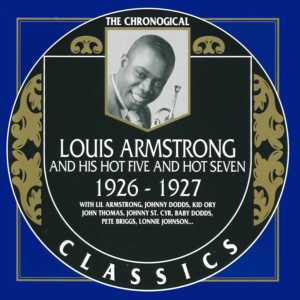
ALBUM NOTESAlbum spotlight: Louis Armstrong and His Hot Five – West End Blues 1926-1928
West End Blues 1926-1928- Album Overview
"West End Blues 1926-1928" is a seminal collection by the legendary jazz trumpeter Louis Armstrong and His Hot Five, released in 1928. This album captures the essence of the early jazz era, showcasing Armstrong's innovative approach to music that would shape the future of the genre. Recorded primarily in the late 1920s, the tracks feature a mix of original compositions and standards, highlighting the collaborative efforts of exceptional musicians including Lil Hardin Armstrong on piano, Fred Robinson on trombone, and Johnny Dodds on clarinet.
The title track, "West End Blues," is particularly notable for its intricate trumpet solos and expressive melodies, making it a landmark piece in jazz history. The album was released under the Okeh Records label, a prominent label in the 1920s known for promoting jazz artists. Armstrong's work with His Hot Five not only emphasized improvisation and individual expression but also introduced new rhythmic and melodic ideas into jazz music.
Musically, the album reflects the cultural landscape of the time, as the 1920s were marked by the Harlem Renaissance and the proliferation of jazz in American society. Armstrong's ability to blend heartfelt emotion with technical prowess helped to elevate jazz from a regional folk music to a respected art form. The singles from this album have since been recognized as some of the most influential in jazz history, leaving a lasting legacy on musicians and listeners alike.
Review
"West End Blues 1926-1928" stands out for its remarkable sound quality and the seamless integration of various musical elements. Armstrong's trumpet work is characterized by a warm, rich tone that captivates listeners, while his vocal performances add a layer of emotional depth. The interplay between the musicians showcases a level of camaraderie and understanding that is often absent in contemporary recordings.
The artistic vision of Armstrong and His Hot Five is evident throughout the album, as they prioritize improvisation and the expression of individual voices within the ensemble. The lyrics, primarily in the context of the songs, reflect the struggles and joys of life, resonating deeply with audiences of the time and continuing to do so today. Armstrong's innovative use of phrasing and timing in his trumpet solos set a standard that would influence countless musicians to come.
Overall, the album is a testament to the transformational power of jazz, both musically and culturally, affirming Armstrong's pivotal role in its evolution.
Highlights
- Innovative trumpet solos that define the jazz genre.
- Collaboration with top musicians of the time, creating a rich musical tapestry.
- Cultural significance as a representation of the Jazz Age and the Harlem Renaissance.
Weak points
- Some tracks may feel dated to modern listeners unfamiliar with early jazz.
- The absence of more diverse instrumentation could limit appeal for some audiences.
- Production quality reflects the era, which may not meet contemporary standards.
Overall evaluation
"West End Blues 1926-1928" is a crucial album in the history of jazz, showcasing Louis Armstrong's genius and the vibrant spirit of the 1920s. It remains a must-listen for anyone interested in the roots and evolution of jazz music.
Personal rating: 9/10