ALBUM NOTESDuke Pearson – Tender Feelin's: track-by-track perspective
Tender Feelin's- Album Overview
Duke Pearson's "Tender Feelin's," released in 1968, stands as a significant entry in the realm of jazz, showcasing the pianist's exceptional talent and compositional prowess. The album was produced by the iconic Blue Note label, a powerhouse in the jazz genre known for its high-quality recordings and influential artists. Recorded during a period of artistic exploration, "Tender Feelin's" features a stellar lineup, including notable musicians such as trumpeter Donald Byrd, saxophonist Wayne Shorter, and drummer Elvin Jones, who contribute to the album's rich soundscapes.
The album consists of eight tracks, blending original compositions by Pearson with interpretations of jazz standards, all characterized by intricate harmonies and emotive melodies. The title track, "Tender Feelin's," encapsulates the album's essence, offering a lush arrangement that highlights Pearson's lyrical piano style. Other tracks like "Cristo Redentor" and "The Good Life" further exemplify the album's thematic depth, addressing both personal introspection and broader cultural narratives.
Upon its release, "Tender Feelin's" was met with critical acclaim, solidifying Pearson's reputation as a forward-thinking jazz musician. The album's significance lies not only in its musicality but also in its embodiment of the late 1960s jazz scene, a time marked by innovation and a blending of genres. "Tender Feelin's" continues to resonate with audiences, capturing the essence of jazz while pushing the boundaries of conventional forms.
Review
"Tender Feelin's" is a masterclass in emotional expression and technical proficiency. Duke Pearson's piano work is both delicate and assertive, weaving through the intricate arrangements with a sense of grace that captivates the listener. The album’s sound is an eclectic blend of hard bop and modal jazz, characterized by rich textures and harmonic sophistication.
The lyrical quality of the compositions allows for a profound connection, inviting listeners to engage with the music on a personal level. Each track unfolds like a narrative, revealing layers of complexity that reflect Pearson's artistic vision. While the melodies are often soothing and introspective, they are also punctuated by moments of spirited improvisation that showcase the talents of the accompanying musicians.
Pearson's ability to balance the delicate with the dynamic is particularly evident in pieces like "Cristo Redentor," where the interplay between the piano and horns creates a compelling dialogue. The production quality is impeccable, allowing each instrument to shine while collectively contributing to the album's cohesive sound.
Highlights
- The exquisite interplay between the piano and brass in "Tender Feelin's."
- The emotive depth captured in Pearson's original compositions.
- The inclusion of exceptional talent in the ensemble, enhancing the overall sound.
Weak points
Overall evaluation
"Tender Feelin's" is a poignant and sophisticated work that exemplifies Duke Pearson's unique voice in jazz. Its combination of emotional depth and technical skill makes it a timeless addition to any jazz collection.
Personal rating: 8/10

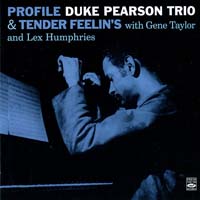 2003Tender Feelin's