ALBUM NOTESListening to Hamburg '74 by Globe Unity Orchestra
Hamburg '74- Album Overview
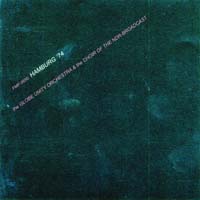
Hamburg '74 is a significant live album by the avant-garde jazz ensemble Globe Unity Orchestra, released in 1974. The album was recorded during a concert at the 1974 Hamburg Jazz Festival and showcases the orchestra's exploratory approach to jazz. This collective, which features a rotating cast of musicians, includes renowned figures such as Peter Brötzmann, a prominent saxophonist known for his intense style, and the innovative trumpeter Manfred Schoof. Released on the influential label FMP (Free Music Production), the album captures a moment in time that exemplifies the free jazz movement of the 1970s.
Hamburg '74 consists of two lengthy tracks, "The Last Dance" and "Live in Hamburg," both of which are marked by their improvisational nature. The recordings highlight the orchestra's ability to blend various musical influences, creating a dynamic sound that is both chaotic and cohesive. The album stands as a testament to the spirit of collaboration among its diverse group of musicians, each contributing their unique voice to the collective sound.
The cultural significance of Hamburg '74 lies in its role in the evolution of free jazz, a genre characterized by its rejection of traditional structures and rhythms. During this period, European jazz musicians were pushing boundaries and experimenting with sound in ways that had not been explored before. The recordings reflect the transformative energy of the time, and the Globe Unity Orchestra’s performance exemplifies the daring exploration that defined the genre.
Review
Hamburg '74 captures the raw energy and improvisational prowess of the Globe Unity Orchestra, offering listeners a visceral experience that transcends conventional jazz forms. The album opens with "The Last Dance," a sprawling, frenetic piece that melds cacophony with moments of haunting beauty, showcasing the group's ability to navigate complex musical landscapes. The interplay between instruments is both chaotic and mesmerizing, as each musician contributes to a collective voice that feels alive and ever-evolving.
The second track, "Live in Hamburg," further emphasizes this artistic vision, as it delves deeper into the realms of sound exploration. The absence of traditional song structures liberates the musicians, allowing them to engage in spontaneous dialogue through their instruments. The intensity of the performance invites listeners to immerse themselves fully in the experience, blurring the lines between composer and audience.
While the album may challenge those accustomed to more structured forms of jazz, it ultimately rewards attentive listeners with its depth and innovation. The Globe Unity Orchestra's Hamburg '74 is not merely an album; it's a sonic journey that challenges the notion of what jazz can be.
Highlights
- Exceptional improvisational skill displayed by the ensemble.
- Rich soundscapes that blend chaos and harmony.
- Cultural significance as a landmark of the free jazz movement.
Weak points
- May be challenging for listeners unfamiliar with avant-garde jazz.
- Lengthy tracks might test the patience of some audiences.
- Lack of melodic structure can be perceived as disorienting.
Overall evaluation
Hamburg '74 by Globe Unity Orchestra is a bold exploration of free jazz that showcases remarkable musicianship and creativity. While it may not appeal to all jazz listeners, its significance in the genre cannot be overstated. The album stands as a powerful testament to the avant-garde spirit of the 1970s jazz scene.
Personal rating: 8/10