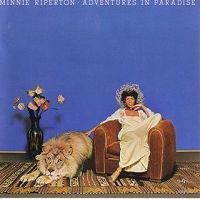
Minnie Riperton is one of the most pioneering female vocalists in popular music. Best known for her 1975 smash hit Lovin' You, she was an incredible talent who pushed boundaries and left a lasting impact on the industry. While few can deny her extraordinary talent, there's been some criticism of Minnie and her unique approach to songwriting over the years. In this blog post, we'll take a look at both sides — the good and bad — surrounding this influential artist as we dive into what made Minnie Riperton such an interesting figure in music history.
Minnie Riperton has been hailed as a trailblazer in the music industry, and rightfully so - her soaring vocals and boundary-pushing approach to songwriting have inspired countless artists over the years. Her hit song Lovin' You continues to be a classic, and her influence is felt in the works of contemporary artists like Solange and Ariana Grande. However, as with any artist, there are both positive and negative aspects to Riperton's legacy. In this blog post, we'll explore the good and bad of Minnie Riperton, unpacking what made her such an important figure in music history.
Let's start with the good. Minnie Riperton was an undeniably talented vocalist, with a range that went from a whisper to a scream. Her ability to hit high notes was particularly impressive, and Lovin' You in particular showcases this talent. However, Riperton was much more than just a singer - she was also a songwriter, penning many of her own hits. Songs like Memory Lane and Inside My Love showcase her ability to write about complex emotions in a way that's both relatable and poetic. Additionally, Riperton's work was often experimental and innovative, incorporating elements of jazz and rock into her music. Overall, Riperton was a groundbreaking artist whose work continues to inspire musicians to this day.
However, there are also some negative aspects to Riperton's legacy. One criticism of her work is that it can be overly saccharine or cheesy at times - Lovin' You in particular has been accused of being too cutesy. Additionally, some have argued that Riperton's music can be overly focused on the romantic and domestic spheres, to the exclusion of other topics. In some ways, her work can be seen as embodying a certain kind of feminine ideal that may not resonate with everyone. Finally, while Riperton was undeniably talented, she was also somewhat limited by the era in which she lived. The 1970s were a time of great change in music, but they were also fairly restrictive in terms of what was considered mainstream or acceptable. It's possible that if Riperton had been born later or worked in a different era, she may have been able to explore even more fully the boundaries she was pushing at the time.
Despite these criticisms, Riperton remains a beloved figure in music history. Her work continues to be influential, and her legacy has only grown over time. Additionally, it's worth noting that criticism is not inherently a bad thing - even great artists have flaws or areas they could improve on. What's important is that we acknowledge both the positive and negative aspects of someone's legacy, so that we can fully appreciate their impact on the world. With Minnie Riperton, there is certainly much to celebrate.
Minnie Riperton was a truly groundbreaking artist whose work continues to inspire musicians today. While there are certainly criticisms that can be leveled at her - particularly around the perceived cheesiness of some of her work - there is no denying the impact she had on the music industry. Riperton pushed boundaries and explored new sonic territory, all while showcasing her incredible talent as a vocalist and songwriter. For these reasons, she will always be remembered as a pioneering figure in popular music.