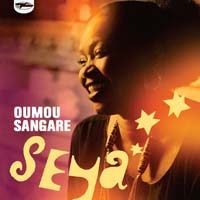
When it comes to West African music, few artists shine as brightly as Oumou Sangare. Revered as the Queen of Wassoulou, Oumou has been captivating audiences around the world with her powerful voice and soul-stirring songs for over three decades. In this blog post, we take a deep dive into the life and musical journey of this legendary artist. From humble beginnings to becoming a global icon, we explore Oumou's most famous albums, songs, and influences that have shaped her unique voice and style.
Born in Bamako, Mali, in 1968, Oumou Sangare came from a family of griots – West African storytellers, musicians, and poets. She began singing at the age of five and quickly became a prodigious talent, winning her first national competition at just sixteen years old. However, it was her 1989 debut album, Moussolou (Women), that propelled her to fame both in Mali and abroad. The album, which dealt with taboo issues such as female sexuality and gender inequality, earned critical acclaim for its powerful lyrics and innovative blend of traditional and modern sounds.
Following the success of Moussolou, Oumou continued to push boundaries with her music and lyrics. In 1993, she released Ko Sira, which incorporated elements of funk and reggae into her already eclectic sound. The album's title track, a love song that celebrated the value of work and hard-earned wealth, became a massive hit across West Africa and beyond. Her next album, Worotan, released in 1996, was a collaboration with Cuban musicians that showcased Oumou's ability to incorporate diverse musical styles into her work.
Over the years, Oumou Sangare has released several more albums, each one showcasing her musical prowess and social awareness. Her most recent album, Mogoya, released in 2017, was a departure from her traditional sound, incorporating more electronic elements and featuring collaborations with contemporary artists such as Tony Allen and Damon Albarn. However, the album's themes of love, unity, and human dignity remained as relevant as ever.
What sets Oumou Sangare's music apart is her mastery of the traditional rhythms and melodies of her native Wassoulou region, which spans across Mali, Guinea, and Ivory Coast. Her throaty voice, combined with percussion instruments such as the kamalengoni and the calabash, creates a hypnotic and evocative sound that transports listeners into a world of intense emotions and raw energy.
Oumou Sangare's musical journey is a testament to the power of music to inspire change and unite people across cultures and generations. Her ability to infuse traditional West African sounds with contemporary influences has made her an icon of world music, earning her numerous accolades and critical acclaim. But it is her unwavering commitment to social justice and women's empowerment that makes her music truly timeless, resonating with audiences all over the world. Whether you are a diehard fan or just discovering her for the first time, Oumou Sangare's music is a gift that keeps on giving.