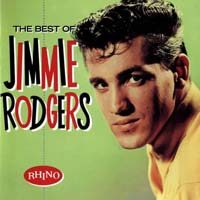
When it comes to the origins of country music, few figures stand out as prominently as Jimmie Rodgers. Along with his peer the Carter Family, Rodgers helped define the hillbilly sound that would later be known as country. His life was tragically short, cut down by tuberculosis at the age of 35, but in his years of recording and performing, he left behind a legacy that inspired countless artists to come. In this article, we'll explore the musical biography of Jimmie Rodgers: his early beginnings, his most famous albums, his most famous songs, and the unique musical style and influences that set him apart.
Blog Body: Born in 1897 in Mississippi, Jimmie Rodgers grew up in a family of musicians. His grandfather was a fiddler, and his mother played piano and guitar. Despite his love of music, young Jimmie didn't immediately pursue it as a career - he worked as a water boy on the railroad, and later became a brakeman for the company. However, in 1927, his talent couldn't be contained any longer. He auditioned for Victor Records, and the rest, as they say, is history.
Rodgers' first recordings were released in 1927, and they were an instant sensation. His unique singing style, characterized by yodeling and a high, quavering tenor, stood out from the crowd. But it wasn't just his voice that made him special - Rodgers also wrote many of his own songs, and they often dealt with subjects that were new to country music. Rather than just singing about love and heartbreak, Rodgers wrote about the rigors of traveling, the loneliness of life on the road, and the struggles of poverty.
One of Rodgers' most famous albums is The Essential Jimmie Rodgers, a compilation released in 1997 on the 60th anniversary of his death. This album is a great introduction to Rodgers' work, featuring favorites like Blue Yodel (T For Texas), Waiting for a Train, and In the Jailhouse Now. Another essential album is The Singing Brakeman, a 1992 box set that collects every song Rodgers recorded for Victor Records between 1927 and 1933. This set is especially valuable for serious fans who want to get a full picture of the artist's career.
Of course, no exploration of Jimmie Rodgers' musical biography would be complete without a look at his most famous songs. Blue Yodel (T For Texas) is perhaps his signature tune, with its catchy opening line (T for Texas, T for Tennessee) and its tale of heartbreak on the road. Other classics include Mule Skinner Blues, Frankie and Johnny, and Hobo's Meditation. But perhaps the most moving of all Rodgers' songs is Jimmie Rodgers' Last Blue Yodel, also known as The Women Make a Fool Out of Me. This song, recorded just months before Rodgers' death, features his voice weakened by illness, but still able to connect with listeners in a deep and powerful way.
So what was it that made Jimmie Rodgers so special? What set him apart from his peers, and made him such an enduring figure in country music history? Part of it was his unique voice - there's nobody else quite like Jimmie Rodgers. But it was also his commitment to authenticity and his willingness to write about real, sometimes difficult, experiences. Rodgers' songs deal with themes that are still relevant today - the loneliness of modern life, the struggle for economic security, and the desire for connection with others.
Conclusion: Jimmie Rodgers may have only recorded for a few short years, but his impact on country music was huge. From his first recordings at Victor to his heartbreaking final sessions, Rodgers left behind a body of work that has inspired generations of musicians. His dedication to authenticity and his willingness to take risks with his songwriting set him apart from his peers, and made him one of the greatest country singers of all time. So the next time you're listening to Blue Yodel (T For Texas) or The Women Make a Fool Out of Me, take a moment to appreciate the incredible talent of Jimmie Rodgers, and the legacy he left behind.