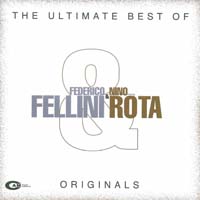
Nino Rota was an Italian composer and conductor who left an indelible mark on the world of music with his unforgettable compositions. Born in Milan in 1911, Rota showed an early interest in music, which was nourished by his family's musical traditions. He went on to study music in Milan and Rome and began his career as a composer in the 1930s. Over the years, Nino Rota would contribute to the soundtracks of over 150 films, working with some of the biggest names in Italian and American cinema. Today, his music remains an enduring legacy, encompassing a rich variety of genres and styles.
Nino Rota's musical journey began in his hometown of Milan, where he was born into a family of musicians. His father, Giovanni Rota, was a composer and pianist, and his mother, Ernesta Rinaldi, was a singer. As a child, Nino was exposed to a wide range of music, from classical to folk and popular music. He began his formal music education at the age of 12 when he was admitted to the Milan Conservatory. It was here that Rota developed a passion for opera, which would influence his later compositions.
In the 1950s, Nino Rota began working with the famed Italian director Federico Fellini, and their collaborations produced some of the most iconic films in cinema history. Rota's scores for such Fellini classics as La Strada, Nights of Cabiria, 8½, and Amarcord are considered some of his most memorable works. His music for Fellini's films is characterized by a lively and whimsical tone that captures the director's surreal and fantastical vision of the world.
Apart from Fellini's films, Rota composed music for a number of other acclaimed movies, including Francis Ford Coppola's The Godfather films, Luchino Visconti's Rocco and His Brothers, Franco Zeffirelli's Romeo and Juliet, and Franco Rossi's War and Peace. In each of these works, Rota's music established a unique atmosphere and mood that complemented and enhanced the visual storytelling.
Nino Rota's musical style was characterized by a fusion of several genres, including classical, opera, jazz, and pop. His compositions were marked by a strong melodic sense and a gift for creating catchy tunes that stayed with the listener long after the music had stopped. Rota's music was also distinguished by his use of unconventional instrumentation and his willingness to experiment with different sounds and textures.
Nino Rota's music has left an indelible mark on the world of music and cinema. His compositions, which range from playful and whimsical to hauntingly beautiful, have stood the test of time, remaining as fresh and engaging as ever. Rota's legacy continues to inspire new generations of composers and film lovers, reminding us of the extraordinary power of music to move and enchant us.
In conclusion, Nino Rota's musical biography is a fascinating journey through the life and work of a remarkable composer. From his early beginnings in Milan to his collaborations with some of the greatest filmmakers of all time, Rota's music has left an impact on our collective cultural consciousness that few artists can match. Whether it's the playful and whimsical sounds of his early work or the haunting melodies of his later years, Nino Rota's music continues to charm and captivate audiences around the world.
In conclusion, Nino Rota's musical biography is a fascinating journey through the life and work of a remarkable composer. From his early beginnings in Milan to his collaborations with some of the greatest filmmakers of all time, Rota's music has left an impact on our collective cultural consciousness that few artists can match. Whether it's the playful and whimsical sounds of his early work or the haunting melodies of his later years, Nino Rota's music continues to charm and captivate audiences around the world.