Since she first burst onto the music scene in 2000 with her hit single I'm Like a Bird, Canadian singer Nelly Furtado has been captivating listeners with her incredible and diverse singing voice. Over the years, she has gone on to become one of the most successful female musicians of our time – earning multiple Grammy Awards as well as numerous other accolades. Despite this success, however, Nelly Furtado's career has often been met with criticism from fans, critics and even industry professionals alike who take issue with some of her creative choices over the years. While it is easy to lambast much of her back-catalogue for various missteps that have left many people wanting more from one of their favorite artists, there also exists a unique charm within her releases that makes them too hard to overlook and can still transport us through time. In this blog post, we will be exploring both the good and bad sides of Nelly Furtado’s musical legacy – so let’s dive right in!
From “I’m Like a Bird” to “Try” to “Promiscuous,” Nelly Furtado has been a household name for over two decades now. She has sold over 40 million records worldwide, won two Grammy Awards, and released six studio albums that showcase her diverse and dynamic vocal range.
Despite such success, Nelly Furtado has not always been immune to criticism. From her experimental Folklore album, which was considered a commercial flop, to her controversial Timbaland-produced Loose era, which alienated some of her longtime fans, her creative choices have been met with mixed reviews.
This long-awaited deep dive into Nelly Furtado’s musical legacy aims to present an unbiased look at both her best and worst moments. So, sit back, turn up the volume, and join us as we explore what makes Nelly Furtado’s music so unique and polarizing.
Nelly Furtado’s music career began with a bang in 2000 with her debut album Whoa, Nelly! Her unique sound, a blend of pop, folk, and world music, immediately set her apart from her contemporaries. The lead single “I’m Like a Bird” topped charts worldwide and earned her a Grammy for Best Female Pop Vocal Performance.
However, it was her sophomore album Folklore that marked a significant departure from her pop sensibilities. Released in 2003, Folklore showcased Nelly Furtado’s growth as a songwriter and her willingness to experiment with different genres and sounds. Although it received critical acclaim, it was a commercial failure. Nonetheless, the album’s “Powerless (Say What You Want)” remains a fan favorite, and Nelly Furtado’s vocals on the track are still as powerful and emotive as ever.
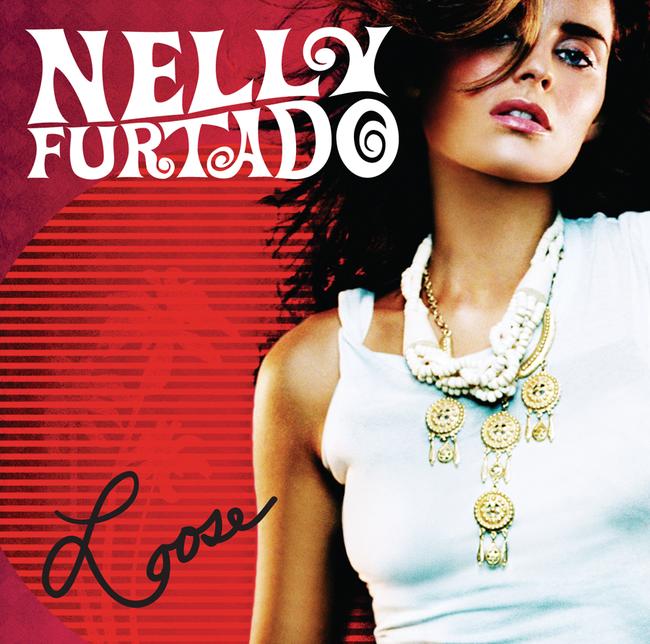
Then came Loose, her album that fully embraced the Timbaland production style, which was popular at the time. The album’s lead single “Promiscuous” received massive radio airplay and charted high worldwide. However, while the album cemented Nelly Furtado’s status as a pop star, it also drew criticism for being formulaic and pandering to mainstream audiences. Despite this, Loose remains her best-selling album worldwide, and it’s hard to ignore the undeniable charm of “Say It Right” and “Maneater.”
Moving forward, Nelly Furtado took a step back from the mainstream sound, and in 2009, released her fourth album, Mi Plan, with entirely Spanish-language tracks. Though it wasn’t as commercially successful as her previous work, it showcased her versatility as an artist and a willingness to experiment with different sounds and languages.
Her following two albums, The Spirit Indestructible (2012) and The Ride (2017), were a return to the pop sound, albeit with a more mature direction. The Spirit Indestructible didn’t receive as much attention as her previous albums, but it contained some of her strongest and most emotional tracks, such as “Waiting for the Night” and “Bucket List.” The Ride, on the other hand, was met with mixed reviews, but it was an introspective album that showcased Nelly Furtado’s growth as an artist and her willingness to reveal her vulnerability.
Her following two albums, The Spirit Indestructible (2012) and The Ride (2017), were a return to the pop sound, albeit with a more mature direction. The Spirit Indestructible didn’t receive as much attention as her previous albums, but it contained some of her strongest and most emotional tracks, such as “Waiting for the Night” and “Bucket List.” The Ride, on the other hand, was met with mixed reviews, but it was an introspective album that showcased Nelly Furtado’s growth as an artist and her willingness to reveal her vulnerability.
Nelly Furtado’s music catalogue is a testament to her versatility and willingness to experiment with different genres and sounds. While it’s easy to criticize her creative choices, her willingness to expand musically is admirable, and she has carved out a unique spot in the music industry. From folk to pop to Spanish-language tracks, there’s something for everyone in Nelly Furtado’s discography. As fans, we can’t wait to see what the future holds for this talented and resilient artist.