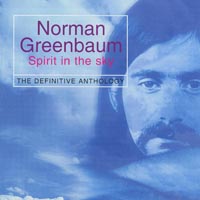
Norman Greenbaum has been a dynamic force in the music industry for decades now, and his work continues to influence countless listeners around the world. Although some may consider his hits from the 1970s like Spirit in the Sky to be gimmicky pop songs, there is still something special about this artist that has kept him relevant all these years later. We’ll delve into both sides of Norman’s success – examining what critical voices have said as well as exploring how some of his best-loved tracks have impacted fans. Ready? Let's dive right in!
Norman Greenbaum is a name that’s been closely associated with one of the most enduring and beloved rock songs of all time, Spirit in the Sky. Although it has been over forty years since this song first hit the charts, it still continues to be a mainstay on rock radio and a favorite of many music fans. Yet, while “Spirit in the Sky” has undoubtedly played a significant role in Norman’s legacy, there’s so much more to this artist than this one-hit wonder. In this blog post, we’re going to explore the life and music of Norman Greenbaum, examining how critical voices have viewed his work as well as exploring how some of his lesser-known tracks have impacted music lovers around the world.
Norman Greenbaum was born on November 20th, 1942, in Malden, Massachusetts, and grew up in a Jewish family. He began to take an interest in music at a young age and started playing guitar during his teenage years. Greenbaum's first band was called Dr. West's Medicine Show and Junk Band, and the group’s sound was heavily influenced by jug and blues music. However, Greenbaum’s most significant success came several years later, when he released the now-iconic “Spirit in the Sky” in 1969. The song was an instant hit, topping charts in the US, the UK, and several other countries. Though many artists have recorded Spirit in the Sky over the years, Norman's original version remains the most popular.
Yet, some critics have been less than enthusiastic about Greenbaum's work, citing the perceived simple-mindedness or irrelevance of his lyrics. They point to songs like Canned Ham or The Eggplant That Ate Chicago as examples of novelty tracks that did little to broaden the conversation in popular music. Still, the longevity of Spirit in the Sky says something about the enduring power of Norman's music. To many people, this track has become an anthem of self-empowerment, with its catchy, upbeat melody and positive message.
Despite his label of being a one-hit wonder, Norman Greenbaum did not stop making music after Spirit in the Sky. He went on to release several more albums throughout the 1970s, including Morning Again and Petaluma. While these albums may not have produced any more chart-topping hits, they have their own unique charm and character, showing Norman's range as an artist. Songs like California Earthquake or Skyline exhibit his ability to blend simple chord progressions with powerful, driving melodies that are guaranteed to get stuck in your head.
Critics aside, to this day, Norman Greenbaum remains a favorite among music fans. Whether it be through his legendary hit song Spirit in the Sky or through some of his lesser-known tracks, there's something about Norman's music that continues to resonate with listeners. For many, his music embodies an attitude of individuality, creativity, and a carefree spirit that's always been at the heart of rock and roll.
In conclusion, Norman Greenbaum’s musical legacy is more significant than many might have supposed. While it’s true that Spirit in the Sky remains his signature track, it’s not his only musical contribution. His career spanned several decades, and he released several albums over his lifetime that showed his range and his ability to create songs that were both catchy and meaningful. Whether you love his music or only know him for his massive hit single, there's no denying that Norman Greenbaum remains one of the more fascinating and enduring personalities in the world of music. He reminds us that the best way to produce great music is to be true to yourself and to follow your passions, and that sentiment, in a sense, might be his most valuable contribution to the world.