Biography
Diary of Dreams: history and sound
Diary of Dreams is a German Darkwave band. The lead singer and founding member Adrian Hates has produced most of the albums by himself or with minimal help from others.
Diary of Dreams- Revisiting the Dark Electronic Music of the '90s
In the '90s, electronic music was booming with a surge of genres ranging from techno to industrial and EBM (Electronic Body Music). Among these, Diary of Dreams emerged as one of the influential bands to introduce dark electronic music to the world. The band founded by Adrian Hates, the multi-talented instrumentalist, composer, and lyricist, Diary of Dreams, has been producing music for over two decades. This musical article is a revisiting of Diary of Dreams' biography, music style, best songs, famous concerts, and a critic.
Diary of Dreams roots can be traced back to 1989, where Adrian Hates began producing music with his friends in West Germany. After a few years of experimentation, Adrian Hates founded Diary of Dreams, and since 1994, he has released thirteen studio albums with various members of the band.
Diary of Dreams is known for their signature mix of melancholic lyrics, gloomy soundscapes, and electronic rhythms reminiscent of darkwave and gothic rock. The band has kept their music style consistent throughout two decades, offering a unique style of storytelling through music. The songs are often reflective of human weakness, emotions, and the darker side of human nature.
Some of the best songs from Diary of Dreams are 'The Curse,' 'Dead Souls Dreaming,' 'Amok,' 'Chemicals,' 'King of Nowhere,' and 'Butterfly:' each presenting a unique spectrum of emotions and musical style. These songs have become cult classics over the years and remain popular among fans of dark electronic music.
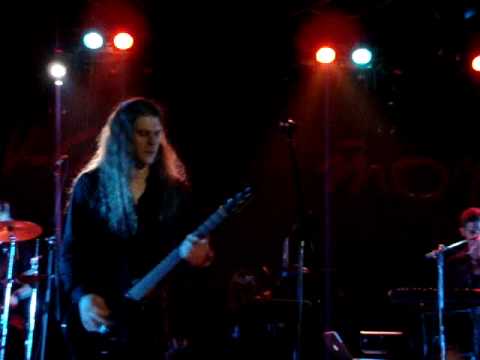
Diary of Dreams has toured extensively throughout Europe, performing at famous concerts like the M'era Luna Festival, WGT (Wave-Gotik-Treffen), and Mera Luna Festival. The band's live performances are characterized by excellent stage presence, high energy, and a unique blend of multimedia.
Despite the strong following and critical acclaim, Diary of Dreams has received over the years, It is not immune to critique. While some enthusiasts appreciate the melancholic sound that Adrian Hates has crafted over the years, other reviewers criticize the band for their lack of diversity and experimentation.
In conclusion, Diary of Dreams has been an essential contributor to dark electronic music for over two decades. Their body of work remains deeply rooted in a melancholic sound reflective of human weakness and the darker side of human nature. While the band's instrumentation may not be diverse, its unique storytelling through music is why it remains a favorite among enthusiasts of the genre. Diary of Dreams has created a legacy that will undoubtedly have an influence on future dark electronic music.
In conclusion, Diary of Dreams has been an essential contributor to dark electronic music for over two decades. Their body of work remains deeply rooted in a melancholic sound reflective of human weakness and the darker side of human nature. While the band's instrumentation may not be diverse, its unique storytelling through music is why it remains a favorite among enthusiasts of the genre. Diary of Dreams has created a legacy that will undoubtedly have an influence on future dark electronic music.
Diary of Dreams- Revisiting the Dark Electronic Music of the '90s
In the '90s, electronic music was booming with a surge of genres ranging from techno to industrial and EBM (Electronic Body Music). Among these, Diary of Dreams emerged as one of the influential bands to introduce dark electronic music to the world. The band founded by Adrian Hates, the multi-talented instrumentalist, composer, and lyricist, Diary of Dreams, has been producing music for over two decades. This musical article is a revisiting of Diary of Dreams' biography, music style, best songs, famous concerts, and a critic.
Diary of Dreams roots can be traced back to 1989, where Adrian Hates began producing music with his friends in West Germany. After a few years of experimentation, Adrian Hates founded Diary of Dreams, and since 1994, he has released thirteen studio albums with various members of the band.
Diary of Dreams is known for their signature mix of melancholic lyrics, gloomy soundscapes, and electronic rhythms reminiscent of darkwave and gothic rock. The band has kept their music style consistent throughout two decades, offering a unique style of storytelling through music. The songs are often reflective of human weakness, emotions, and the darker side of human nature.
Some of the best songs from Diary of Dreams are 'The Curse,' 'Dead Souls Dreaming,' 'Amok,' 'Chemicals,' 'King of Nowhere,' and 'Butterfly:' each presenting a unique spectrum of emotions and musical style. These songs have become cult classics over the years and remain popular among fans of dark electronic music.
Diary of Dreams has toured extensively throughout Europe, performing at famous concerts like the M'era Luna Festival, WGT (Wave-Gotik-Treffen), and Mera Luna Festival. The band's live performances are characterized by excellent stage presence, high energy, and a unique blend of multimedia.
Despite the strong following and critical acclaim, Diary of Dreams has received over the years, It is not immune to critique. While some enthusiasts appreciate the melancholic sound that Adrian Hates has crafted over the years, other reviewers criticize the band for their lack of diversity and experimentation.
In conclusion, Diary of Dreams has been an essential contributor to dark electronic music for over two decades. Their body of work remains deeply rooted in a melancholic sound reflective of human weakness and the darker side of human nature. While the band's instrumentation may not be diverse, its unique storytelling through music is why it remains a favorite among enthusiasts of the genre. Diary of Dreams has created a legacy that will undoubtedly have an influence on future dark electronic music.
In conclusion, Diary of Dreams has been an essential contributor to dark electronic music for over two decades. Their body of work remains deeply rooted in a melancholic sound reflective of human weakness and the darker side of human nature. While the band's instrumentation may not be diverse, its unique storytelling through music is why it remains a favorite among enthusiasts of the genre. Diary of Dreams has created a legacy that will undoubtedly have an influence on future dark electronic music.